
Some Lakes Run Brown. Turns Out That's Great News If You're After Pike or Walleye.
Reggie Thompson · July 31, 2026 · 4 min read
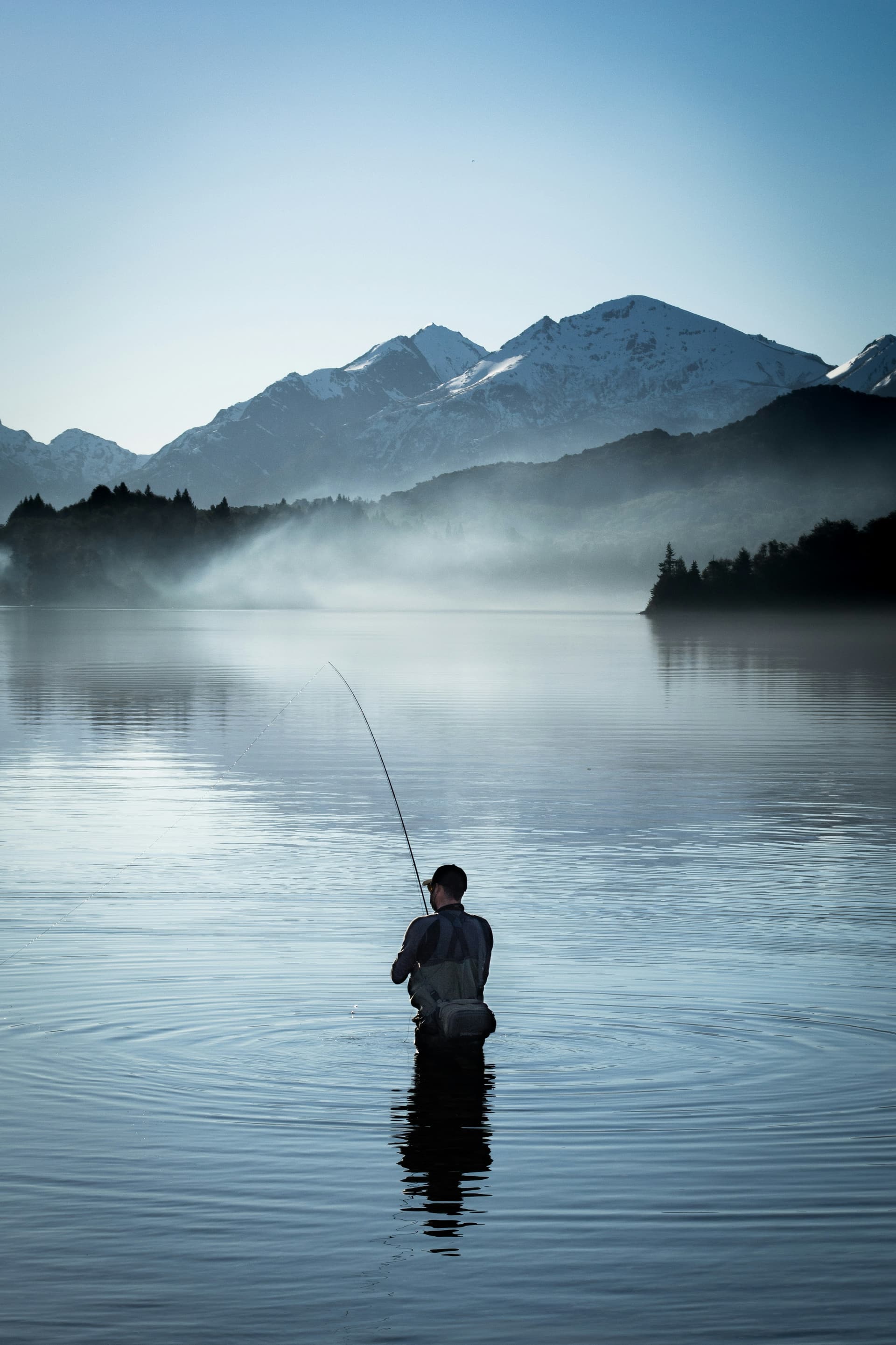
Some lakes run gin-clear. Others look like stained, weak tea no matter how calm the water gets. A new analysis in Biological Reviews tracked fish abundance across 871 lakes in Ontario and found a clear split: pike and walleye tend to do better in browner water, while trout, bass, perch, and whitefish tend to do worse. To measure "browner" in the first place, the researchers built a water-color score using data from as many as 1,533 lakes across Canada, the northern US, and Europe, a separate piece of the project from the fish-abundance results themselves.
Why Eyes (and Lateral Lines) Decide Who Wins
At the lake level, browner water tracked with lower numbers of lake trout, yellow perch, largemouth bass, smallmouth bass, and lake whitefish. It tracked with higher numbers of northern pike and walleye. Brook trout didn't show a consistent pattern either way. A separate piece of the analysis looked at roughly 100 fish species across 303 Canadian lakes and compared three physical traits, eye diameter, mouth size, and mouth position, against how each species responded to water color. The researchers wrote that "species with larger eyes tended to respond more positively to browning" than smaller-eyed species, and their browning measure explained 27 percent of the variance in those models, averaged across every species tested.
The paper's authors offer one possible explanation, and they're careful to frame it as exactly that, a possible explanation, not a settled one. Walleye have specialized retinas built for low light. Pike have a well-developed lateral line system. Neither trait depends on clear water to function, which the authors suggest may explain why those two species hold up in browner lakes while species like trout, bass, and perch decline in the same water. The study doesn't test that mechanism directly. It's an explanation the authors offer, not a result they proved.
How They Pulled This Off
This wasn't one lake, one season, or one lucky dataset. The core population analysis drew on fish abundance records from 871 Ontario lakes collected between 2008 and 2017, across eight species: lake trout, northern pike, walleye, yellow perch, largemouth bass, smallmouth bass, lake whitefish, and brook trout. The community-level piece added presence-absence data from another 303 Canadian lakes. Separately, to build a reliable browning measurement in the first place, the researchers combined dissolved organic carbon, water clarity, and water color data across as many as 1,533 lakes in Canada, the northern US, and Europe. That larger dataset established how those water-color metrics relate to each other, not a retest of the fish pattern at that scale. It's a synthesis and analysis paper, not a single field experiment. But the size of what they pulled together is what makes the pattern worth paying attention to.
The Catch
The authors flag their own confound: lake trout numbers dropping as water got browner could partly reflect lake size or depth, since those characteristics tend to travel with water color anyway. Stocking wasn't factored into the community analysis either, and a heavily stocked lake could mask or exaggerate the natural pattern. The review also pulled in evidence from other published studies on individual fish, and that part is messier than the headline finding. Browning tracked with slower growth in most of those studies. It showed no consistent effect on foraging, and no consistent link to survival either, something the paper's own authors call a bit of a puzzle. None of this proves water color causes what happens to a fish population on its own. It's a strong, wide pattern, not a mechanism anyone has nailed down with an experiment yet. The authors say as much themselves, calling for more mesocosm and whole-lake experiments before this gets treated as settled.
What to Throw in Stained Water
I never thought about my own fishing history in terms of water color until I read this. Sierra Nevada streams and alpine lakes run about as clear as water gets, and that's trout water through and through, exactly what this study would predict. Our cabin lake in the UP runs stained, more tea than glass most summers, and it's always been a largemouth, smallmouth, and northern pike lake first. Every walleye trip I've taken in Canada was also on darker water, never the clear stuff. I'd never connected those dots before.
If your lake runs brown and you keep marking pike and walleye on the fish finder but come up short on bass or trout, this study is a decent explanation, not bad luck or bad casting. Whether that should change what you throw, I can't say the study tested that. My own hunch, not something this paper measured, is that lures leaning on vibration over flash make sense in that kind of water, and my UP box is mostly Rapalas, which throw plenty of vibration already. That's a coincidence I like, not a conclusion the researchers reached. It's one analysis, built on real data from hundreds of lakes, not a rule that overrides what you're actually seeing on your own water.
Citation
Roth, A. M., Fugère, V., Rodríguez, M. A., Lapierre, J.-F., Sánchez Schacht, J., Sharma, S., et al. (2025). Differential effects of freshwater browning across fish species: consequences for individual- to community-level fish traits in north temperate lakes. Biological Reviews, 101(1), 128-146. https://doi.org/10.1111/brv.70074