
Largemouth Bass Fishing: A Complete Guide for Midwest Anglers
Reggie Thompson · May 30, 2026 · 9 min read
Largemouth Bass Fishing: A Complete Guide for Midwest Anglers
The largemouth bass is the fish I know best. I've been chasing them on the same lake in Michigan's Upper Peninsula since before I could tie my own knots. My grandfather fished it. My father fished it. My son will be the fifth generation on that water. I hold the cabin record, caught late at night, my buddy screaming when we netted it, quarter inch longer than my grandpa's mount that had hung on the wall for decades.
I can't claim to know everything about bass. Nobody can. But I know this fish well enough to tell you what actually matters and what doesn't, which is different from a lot of what gets written about them.
This is the guide I'd want a newer angler to read before their first serious season.
What Makes Largemouth Bass Different From Other Fish
Largemouth bass are ambush predators. They don't chase food across open water, they wait in cover and strike when something gets close. This single fact shapes almost everything about how you find and catch them.
They prefer warm water (ideally 65–80°F) and murky or stained conditions where their ambush advantage is greatest. They're not picky eaters, they'll hit frogs, mice, small birds, and whatever else is unfortunate enough to be on or near the surface. But they're also structure-oriented in a way that rewards anglers who understand where they hide.
Largemouth bass can grow large. Three to five pounds is a solid fish. Seven to eight pounds is a trophy in the Midwest. The current world record is over 22 pounds, though that's an outlier you'll never approach in northern freshwater.
Largemouth Bass Habitat: Where to Find Them
The most important skill in bass fishing is finding fish. If you're not fishing where they are, technique and lure choice don't matter.
Shallow water structure. Bass spend most of their time relating to something: a dock, a weed edge, a fallen tree, a rock pile. Featureless shallow flats hold few fish. Pick a feature and fish it.
Dock pilings and boat lifts. These create shade, attract baitfish, and give bass a defined ambush point. Fish parallel to the dock rather than casting directly under it, you'll cover more of the strike zone. In the UP, dock edges at dusk are some of the most reliable bass spots I know.
Submerged vegetation. Milfoil, coontail, and lily pads hold bass throughout the summer. They're hunting inside the vegetation and along the edges. A Texas-rigged plastic or a frog over the top are the right presentations.
Laydowns and wood. A fallen tree that extends into the water creates layered cover at multiple depths. Bass stack up in fallen trees. Fish the first branches (nearest shore), the trunk, and the deeper secondary branches separately, they often hold fish at different levels.
Points and transitions. Where the bottom changes, from flat to drop-off, from sand to rock, from weeds to bare bottom, bass position themselves to ambush passing baitfish. Learn to read depth changes and you'll find more fish.
When Largemouth Bass Feed
Bass don't feed continuously. Understanding when they're active changes your results significantly.
Early morning: The single best time for shallow-water bass. Low light, calm surface, cool water temperatures. Bass push into the shallows to feed on baitfish and frogs before conditions shift against them. This is when I've caught my biggest fish.
Evening and after dark: Nearly as good as early morning, and in summer often better. Bass feed heavily in low light. The record fish I mentioned earlier came at 11 PM. Topwater fishing in complete darkness, all feel, no sight, is some of the most exciting bass fishing there is.
Spring pre-spawn: Water temperatures climbing from the low 50s into the mid-60s triggers aggressive feeding as bass prepare for the spawn. Some of the easiest fishing of the year.
Spawn: Bass are on beds in shallow water from late spring through early summer, protecting eggs and fry. They're aggressive but not hungry, they're striking to protect the nest, not eat. Many anglers choose not to target bedding fish out of conservation concern.
Post-spawn and summer: Harder. Fish move to deeper, cooler water during the hottest part of the day. Fish early, take a midday break, return in the evening. The middle hours in summer are often not worth the effort.
Fall: Underrated by many anglers. As water cools in September and October, bass feed aggressively to bulk up before winter. Topwater fishing in fall can be exceptional.
Winter: Bass are lethargic but can still be caught on slow presentations near deep structure. Most casual anglers don't target them in winter, which means less pressure.
What Largemouth Bass Eat
Bass are opportunistic. They eat whatever is available and fits in their mouth.
Baitfish are the primary forage in most lakes, shad, bluegill, perch, shiners. Match your lure size to local baitfish size.
Crayfish are a significant portion of the diet, especially in rocky lakes. Brown and orange lure colors mimic crayfish.
Frogs and other surface prey are particularly attractive in summer around lily pads and weeds.
Insects matter more than most anglers think, especially in clear northern lakes where panfish and bass alike feed on surface insects in the evening.
The Lures That Catch Largemouth Bass
There are hundreds of bass lures. Most of them work sometimes. Here are the ones that work consistently enough to start with.
Rapala Original Floater
My go-to lure for 30+ years. A balsa wood minnow that floats at rest and dives on the retrieve. It works at any time of day, in any season where bass are in the shallows. I've caught more largemouth on Rapalas than everything else combined.
Cast it parallel to weed edges, dock lines, and fallen timber. Retrieve with short twitches. The pause is where the fish hit. Colors: silver/black for clear water, firetiger for stained, gold/black at dawn and dusk.
Rapala Original Floater at FishUSA
Texas-Rigged Plastic Worm
The most effective slow presentation in bass fishing. A soft plastic worm, stick bait, or creature bait on a weedless Texas rig can be fished in any cover without snagging. Slow, methodical, and effective when bass are lethargic.
I'll be honest: the Texas rig is not a technique I've used much personally. My bass fishing has leaned heavily on moving baits, Rapalas, spinnerbaits, topwater. The Texas rig and drop shot world is something I've studied more than practiced. What I can tell you is that it produces bass in situations where nothing else does, and the Yamamoto Senko in particular has enough firsthand endorsement from anglers I trust that I'd put it in any tackle box. Start with a 6-inch worm in green pumpkin or watermelon for clear water, darker colors for stained.
Topwater (Morning and After Dark)
Poppers, walk-the-dog lures, and frogs work in low-light conditions. Fish slowly on a calm surface, the bass can hear and feel the disturbance before they can see it clearly. The take is always a surprise and always violent.
Spinnerbaits
Moving baits that work for covering water quickly. Effective in low visibility, around shallow cover, and in early spring when bass are active and aggressive. One of the best searching baits in the Midwest. This is a technique I've used a lot and trust.
Jigs
The most effective lure in dense cover, around docks, in heavy vegetation, around wood. Jigs take skill to fish well but catch the biggest fish in the hardest spots. A 3/8 oz jig with a matching trailer is the setup. I'd be dishonest if I told you I'm a skilled jig fisherman. That's another technique I've studied more than executed. But it's on this list because it belongs here, not because of my personal history with it.
Seasonal Largemouth Bass Fishing Calendar
March–April (pre-spawn): Water warming. Fish shallow, slow presentations. Jigs, swimbaits, slow-rolled spinnerbaits. Bass are aggressive.
May–June (spawn to post-spawn): Shallow-water action at its peak early. Post-spawn fish scatter and feed heavily. This is when most Midwest anglers have their best fishing of the year.
July–August (summer): Fish early and late. Midday is slow. Topwater at dawn and dusk, finesse presentations during the day near deeper structure.
September–October (fall): Aggressive pre-winter feeding. Topwater, crankbaits, spinnerbaits. Fish that were deep in summer move back toward structure.
November–February (winter): Slow fishing. Deep presentations near main lake structure. Drop shot, jigs crawled slowly. Patience required.
Reading the Water: How to Find Bass You Haven't Caught Before
On unfamiliar water, start shallow with a moving bait (spinnerbait or crankbait) to cover ground and mark fish. When you get a bite, slow down and work that area thoroughly with slower presentations.
Look for the transition zones: where weeds meet open water, where the bank changes angle, where a dock ends and a weed edge begins. Bass position themselves at edges because that's where baitfish get pinched.
Polarized sunglasses let you see into the water, spot submerged vegetation, and sometimes actually see fish. Buy a pair.
A Note on Conservation
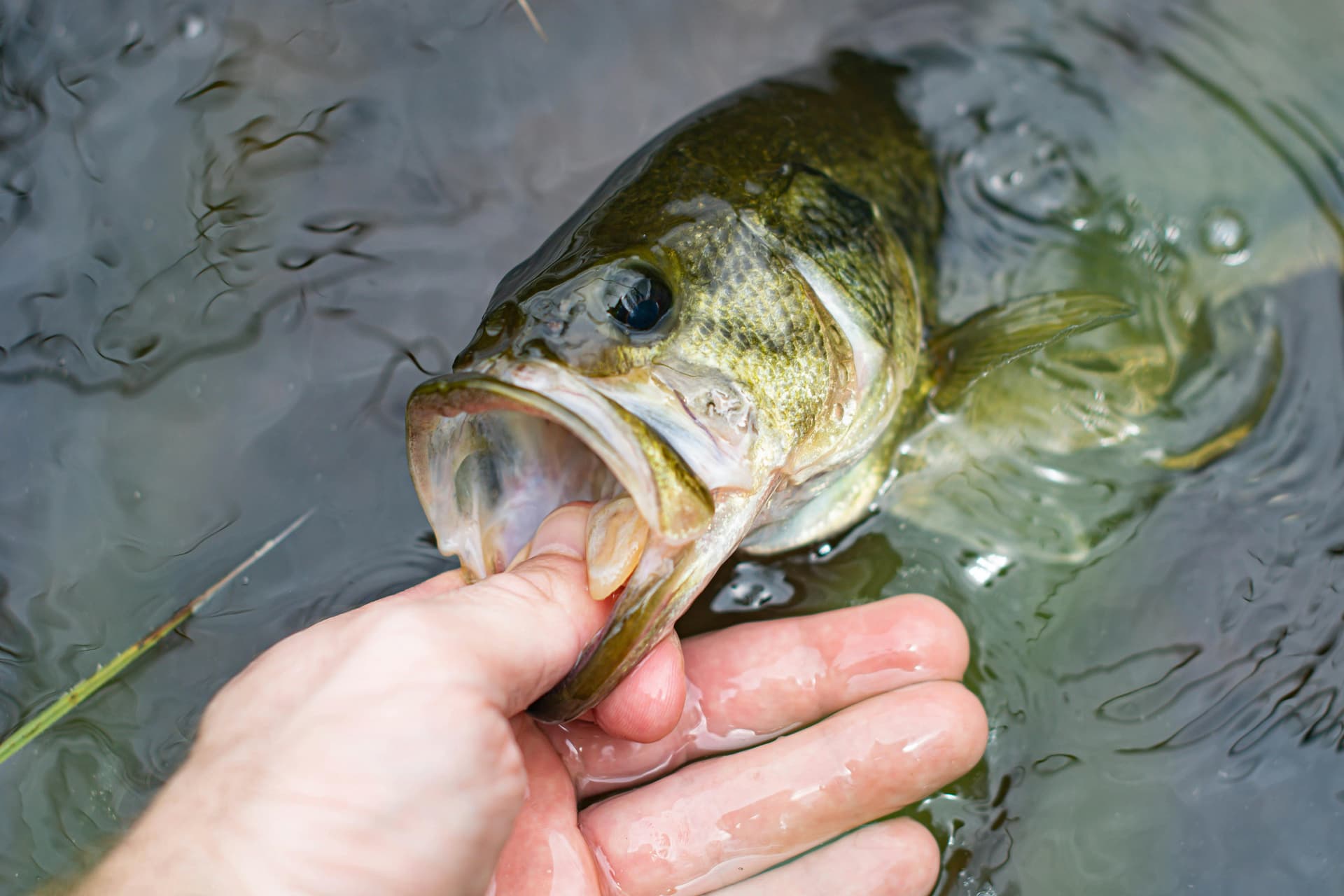
Bass fishing is catch-and-release in most Midwest fisheries. Largemouth bass populations are healthy in many lakes, but they're not infinite. Handle fish carefully, wet your hands, support the body, limit the time out of water. A fish that swims away strongly catches someone else's line next summer.
The cabin lake I've fished my whole life has healthy bass because everyone who's fished it has treated it that way.
Largemouth Bass FAQ
What is the best bait for largemouth bass? There is no single best bait, effectiveness depends on season, water conditions, and depth. The most consistently productive options are: Rapala-style minnow lures for shallow water in low light, Texas-rigged soft plastic worms for heavy cover, topwater lures at dawn and dusk, and jigs for deep structure.
When is the best time to catch largemouth bass? The best times are early morning (30 minutes before to 2 hours after sunrise) and late evening through dark. Spring pre-spawn is the most reliable season. Midday in summer is typically the slowest period.
What size bass is considered a trophy? In the Midwest, a bass over 5 pounds is a genuinely large fish. Seven pounds or more is a trophy-class fish in most northern lakes. Bigger fish exist in southern states with longer growing seasons.
What temperature do largemouth bass prefer? Largemouth bass are most active between 65–80°F. Below 50°F they become sluggish. Above 85°F they move deeper seeking cooler water. Understanding seasonal water temperature explains most of their movement patterns.
Do largemouth bass bite at night? Yes, actively. Summer nights are some of the best largemouth fishing of the year. Bass feed aggressively in darkness, move into very shallow water, and are less wary. Topwater lures and slow-moving presentations work best.