
How to Fly Fish for Beginners: The One Thing You're Getting Wrong
Reggie Thompson · April 27, 2026 · 5 min read
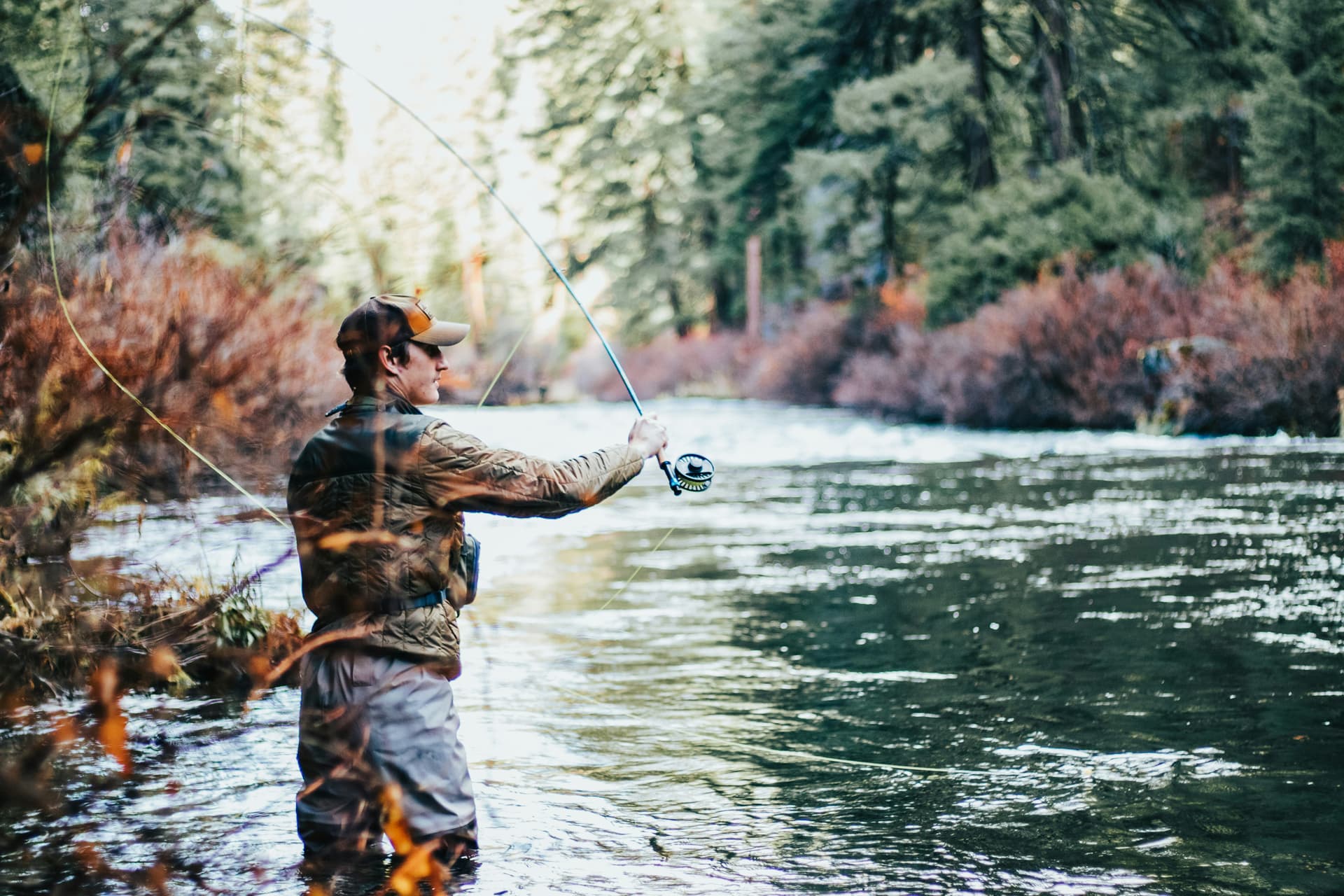
I picked up fly fishing in my mid-30s. At that point I'd been baitcasting for bass since I was a kid, so I figured casting was casting. How different could it be?
Pretty different, as it turns out.
I stood on a riverbank for the first two hours with no idea why the fly kept hitting the water six feet in front of me instead of where I was pointing. I'd been doing everything I knew, the same way I'd always done it. And it wasn't working at all.
Here's what nobody told me before I got out there: in fly fishing, you're casting the line, not the fly.
That sentence sounds simple. It's not. If you've spent any time baitcasting or spinning, your entire muscle memory is built around throwing a weighted lure. The lure has mass. You feel it load the rod. You aim and release. It's intuitive.
Fly fishing is the opposite. The fly weighs almost nothing. It's just riding along for the trip. What you're actually casting is the line itself, which has weight distributed along its length. And the way you move the rod changes entirely when that's the thing you're loading.
Why Baitcasters Struggle Most
If you've never cast a rod before in your life, you might actually pick this up faster than someone who has.
When I switched, I kept trying to "throw" the fly. I'd snap the rod forward too hard, kill the line's momentum, and watch everything pile up in a heap. The instinct to muscle it is exactly wrong. Fly casting is about tempo and rhythm, not force.
A baitcast is a quick, decisive movement. A fly cast is more like a pause. You load the backcast, wait for the line to unroll behind you (that pause is critical and also the hardest thing to trust), and then bring it forward. If you don't give the backcast enough time to fully unroll, you'll crack the line like a whip and lose all your loop shape.
I messed this up constantly at first. The pause felt wrong. It felt like I was losing control. But that pause is the whole game.
Roll Casting: The Skill I Wish I'd Learned First
Of all the things I struggled with learning to fly fish, roll casting gave me the most trouble. And it turned out to be the most useful.
Roll casting is what you use when there's no room behind you for a proper backcast. Trees, brush, a steep bank. In most real fishing situations, you can't just throw a big open-water cast. Roll casting is how you actually get the fly in the water.
The technique is different from a standard cast: you drag the line back along the water surface to create tension, then sweep the rod forward in a smooth arc. The line rolls out in a loop ahead of you. No backcast at all.
It took me a lot of practice at Golden Gate Park's casting ponds before I got comfortable with it. The ponds are free, there's no brush to catch the line, and you can work on form without worrying about actual fish. If you're near a city with anything similar, use it.
The Practice Advice I Wished I'd Gotten Earlier
A few things that actually helped me:
Get off the water to practice. Seriously. I made more progress in 30 minutes at the casting pond than in two full fishing trips where I was frustrated and distracted by trying to catch fish at the same time. Learn the cast first, then apply it.
Watch your backcast. Beginners almost always ignore what's happening behind them. Turn your head and look. Watch the line unroll. It tells you everything about your timing.
Start with less line. Twenty feet is enough to learn on. Most beginners pull out too much line and then can't control it. Get comfortable with a short, clean loop before you add distance.
Don't over-grip the rod. Tense grip kills the feel. Hold it like a salt shaker, not a hammer.
What "Match the Hatch" Actually Means (and Why It Matters)
Once I got a handle on the cast, I hit another wall: choosing the right fly.
"Match the hatch" is the phrase you'll hear constantly. It means: look at what insects are on the water or emerging from it, then choose a fly that mimics that insect in size, shape, and color. Trout are feeding on what's available right now, and they can be picky.
I'll be honest: I'm not an entomologist. I don't know the latin name of every mayfly. What I do is look at the water surface, see what's flying around, catch one if I can, and pick the closest thing in my box. That works more often than you'd think.
If nothing is hatching, I go with a nymph fished below the surface. Trout eat nymphs constantly, even when they're not rising to dry flies.
The Honest Part
I'm still learning. My roll casting is decent now but not great in tight quarters. My reading of water is basic. I've had sessions where I caught nothing and was genuinely baffled by why.
That's fly fishing. It has a real learning curve, and the people who stick with it seem to accept that learning is part of the appeal. If that sounds frustrating, it might not be your thing. If it sounds interesting, you'll probably love it.
Start with the line. Not the fly. Everything else follows from there.