
Early Morning Bass Fishing: Why It Makes or Breaks Your Day
Reggie Thompson · April 14, 2026 · 6 min read
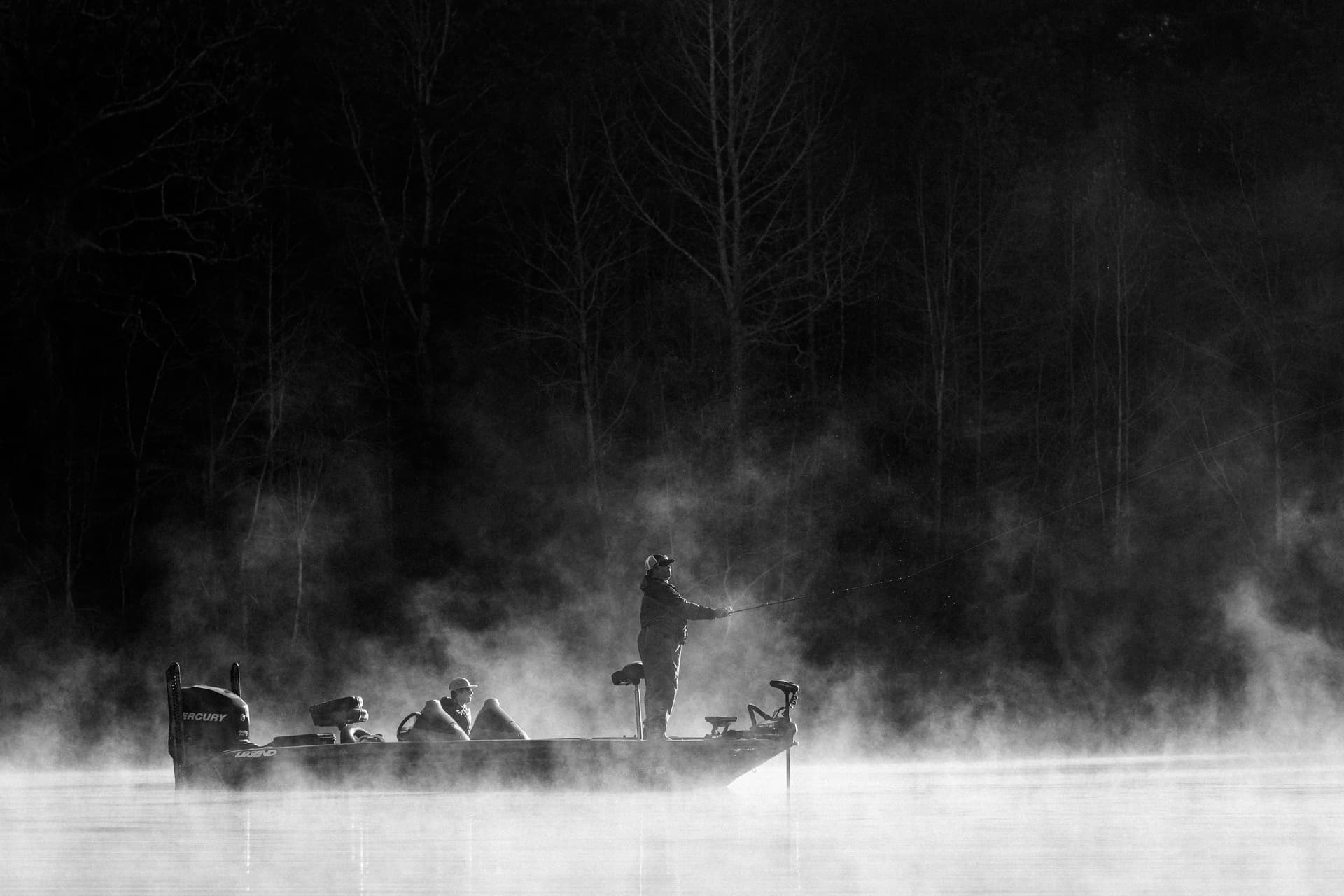
Two summers ago I woke up at 5 AM on the Fourth of July, alone at my family's cabin in the Upper Peninsula of Michigan. Just me and my parents up there, nobody else on the lake. I grabbed my dad's old Shimano, tied on a Rapala, and puttered out in the aluminum boat while it was still dark. An hour later I had a big largemouth on the stringer. That night we cooked it in tin foil in the firepit.
That was one of the better fishing trips I've taken in years. Not because of anything I did particularly well — I've been fishing that lake since I was three — but because I got out there at the right time.
Early morning bass fishing isn't some secret. But I've watched a lot of people, including younger me, show up at 9 or 10 AM and wonder why nothing's biting. Here's what three decades on the water have taught me about timing.
Why Bass Are More Active at First Light
Bass are ambush predators, and low-light conditions are when they have the advantage. In full sun, baitfish can see them coming. At dawn — flat water, long shadows, mist still on the surface — bass push into the shallows to feed before conditions shift against them.
Water temperature matters too, especially in summer. In a lake in the UP in July, surface temps climb fast once the sun gets overhead. Bass are cold-blooded, so when the water warms up their metabolism spikes and feeding becomes inefficient. Early morning the water's still cool from overnight and they're comfortable hunting.
There's also just less disturbance. No boats, no swimmers, no wakes. The lake I grew up on is quiet enough at 5 AM that you can hear fish breaking the surface. By 9 AM the jet skis are out and everything that was in the shallows has moved.
What "Early Morning" Actually Means for Bass
The window I'm talking about is roughly the hour before sunrise through about two hours after. That's it. After that, on a summer day, you're fighting the heat and the sun angle and the boat traffic all at once.
In the UP in July, sunrise is around 6 AM. So I'm talking 5 to 8 AM as your prime window. Set the alarm, make coffee in the dark, get on the water before you're fully awake. The fish don't care that you haven't had breakfast.
I won't pretend every early morning is a guarantee. I've gotten up at 5 AM plenty of times and caught nothing. Some days the fish just aren't moving regardless of the clock. But I've never had a genuinely great morning session that started at 10 AM. The correlation is real.
How to Work the Early Morning Window
A few things that have made a difference for me on water I know well:
Start shallow, near structure. At first light, bass push toward shore. Weed edges, dock pilings, fallen timber — anything that gives them cover to ambush from. I throw parallel to the bank rather than casting out toward open water.
Keep moving until you find them. I'll make a few casts in one spot and move on. Early morning is a searching time. You're covering water to locate where they're holding that day, then once you get a bite you slow down and work that area harder.
Keep noise low. This sounds obvious but it matters more than people think. Don't bang around in the boat. Don't run the motor more than you have to. The lake is glass in the morning and it transmits everything. I've spooked fish just by dropping a tackle box on the aluminum floor.
Throw something you trust. I start with a Rapala Original Floater — my dad's go-to, now mine — in low light because I've caught fish on it for thirty years and I'm not thinking about whether it's working, I know it's working. Whatever that lure is for you, early morning isn't the time to experiment with something new.
The Window Most People Miss: After Dark
Here's the thing that took me embarrassingly long to figure out: if you're fishing for bass in the midwest in summer, early morning is one good window. But late evening into dark is the other one, and most people skip it entirely.
My biggest largemouth came at around 11 PM. I was out with a buddy, using a light off the dock, and when we netted it he screamed loud enough to wake up the cabin. That fish beat my grandpa's record by a quarter inch and it's mounted on the cabin wall now. It did not come at 8 AM on a bright sunny day.
Bass feed heavily after dark in summer for the same reasons they feed at dawn — cool water, low light, baitfish less able to spot them. If you're staying near the water and you're serious about bass, go back out after dinner. I'm a little annoyed it took me as long as it did to start doing this consistently.
The Advice Nobody Wants to Hear: Take a Real Break in the Middle
Don't try to fish straight through from morning to evening. Just don't.
In the heat of summer, midday on a Midwestern lake is slow. The sun is high, the water's warm on top, and the bass have pushed deep or into heavy shade. You can still catch fish, but you're grinding hard for results that don't match the effort. I've spent plenty of mediocre midday hours proving this to myself over the years.
What actually works better: go out early, come in around 9 or 10 AM, eat something, take a nap if you're at a cabin. Then go back out in the evening, and if you can manage it, an hour or two after dark. Two short productive windows beat one long unproductive one every time.
My dad used to smoke cigars in the boat during the evening session to keep the UP mosquitos away. I don't smoke cigars. I just wear long sleeves and accept my situation.
Getting Yourself Out the Door at 5 AM
The hardest part of early morning bass fishing is, obviously, getting up. A few things that actually help:
Rig everything the night before. Don't leave yourself decisions for 5 AM. Lure on the line, rod by the door, coffee on a timer if you have one. The fewer steps between waking up and being on the water, the better.
Go to bed earlier than feels necessary. I'm not great at this one. But on the mornings I've managed it, the difference in how alert I feel on the water is real.
Check the forecast before you set the alarm. If there's a thunderstorm forecast for dawn, sleep in. If it's calm and clear, you have no excuse.
The Bottom Line
I've been fishing the same lake in the UP since before I could read. My son will be the fifth generation on that water. I don't have all the answers — I'm actively trying to get better at reading streams for trout out in California and it's humbling how much there is to still figure out.
But on warm-water bass in the summer, I'm confident: early morning bass fishing is worth setting the alarm. Fish the first two hours of light, take a real break through the middle of the day, and get back out after dark if you can. That July 4th morning at 5 AM by myself on that UP lake, mist still on the water, nobody else around — that's the version of fishing I'm always trying to get back to.