
Best Bass Fishing Lures for Beginners (That Actually Catch Fish)
Reggie Thompson · April 23, 2026 · 6 min read
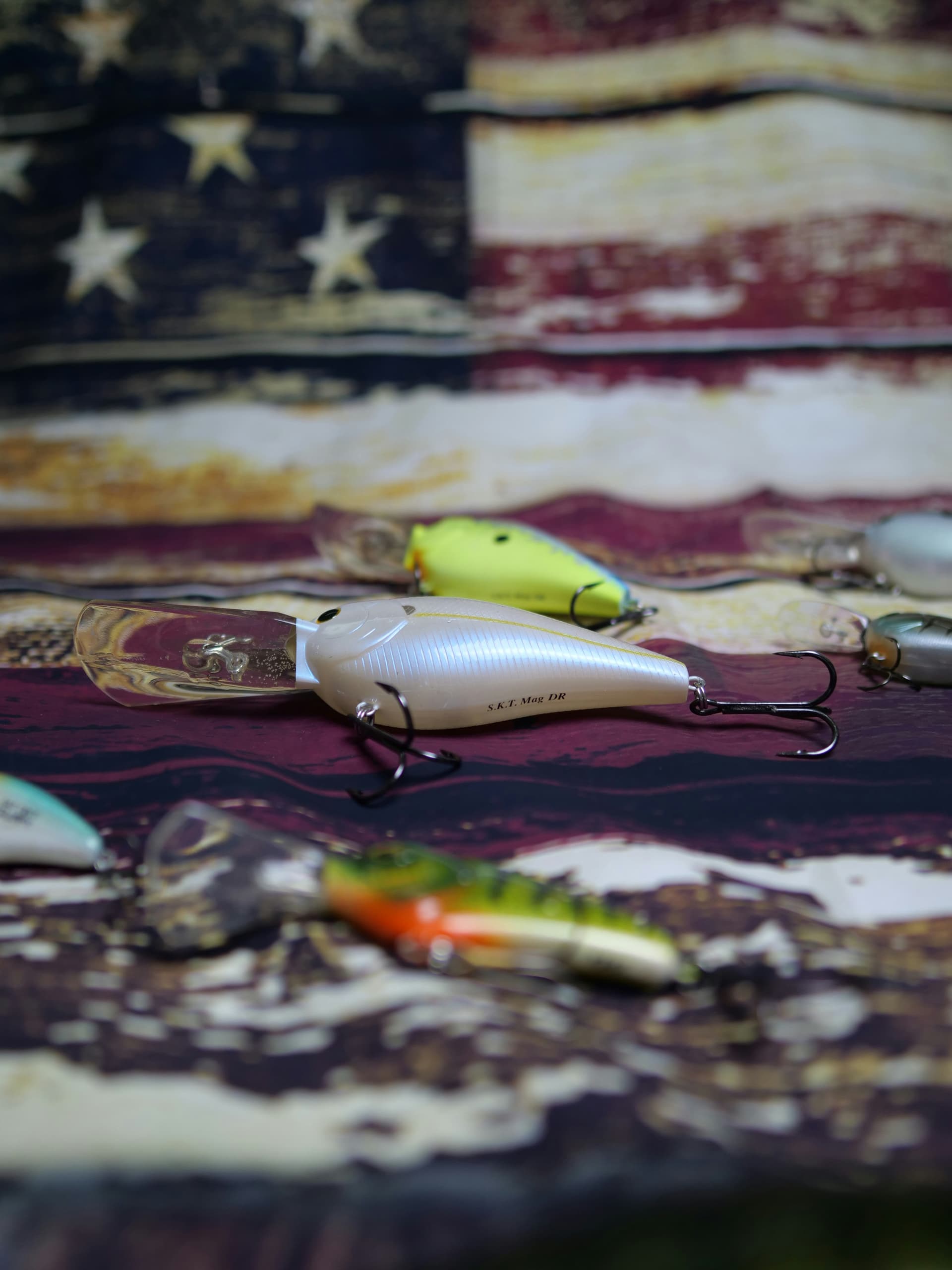
At some point I went through a phase of buying weird lures. Neon tail grubs. Soft plastics shaped like small octopuses. Scented baits that smelled like something you'd use to degrease an engine. They were bright, they were interesting, and they sat in the tackle box at my family's cabin in Michigan for years without catching a single fish, because bass did not care about neon octopuses.
Meanwhile I was catching fish on Rapalas. Same as I'd been doing since I was a kid. Same as my dad. Same as my grandpa before him.
I'm not saying the only lure you'll ever need is a Rapala. There are a few others I'd add. But this post is about keeping it simple, because simple is what actually works when you're starting out. Four lures. Here's the list.
Why You Don't Need 40 Lures
Bass are ambush predators. They eat things that look like food and move in ways that trigger a reaction. The lures that have been catching them for 30, 40, 50 years are still catching them for exactly the same reason. The industry's job is to convince you otherwise. Most of what's new isn't better. It's just new.
When you're starting out, confidence in your lure matters more than variety. A lure you know how to fish will catch more bass than five lures you're guessing at. Pick a short list. Learn it. Add to it slowly, when you actually know what's missing.
The Four Lures
1. Rapala Original Floater: Start Here
I've fished this lure more than anything else in my box, on the UP Michigan lake my family has been on for five generations. It's a balsa wood minnow, floats at rest, and runs just under the surface on a slow retrieve. It looks like something hurt and easy to catch. That's the whole concept and it's been working since the 1930s.
Early morning is when I reach for it first. The lake is glass, the bass are up in the shallows before the sun warms the water and pushes them out, and I'll work it slow along weed edges with a pause after the cast that does more than the retrieve does. There's something about that first twitch, when a still lure suddenly starts moving, that seems to flip a switch.
It's not a deep-water bait. On bright midday it's mostly just decorating the water. But in the right conditions it's as reliable as anything I've ever tied on.
Start with the F07 (2¾ inch) in gold/black or perch. That's it.
Rapala Original Floater on FishUSA
2. Yamamoto Senko: The Lure That Works While You Figure Things Out
Ask any serious bass angler what lure they'd hand a beginner, and the Senko comes up more than anything else. The reason is almost embarrassingly simple: you cast it out, it sinks, and bass eat it on the way down. You don't need to do much.
It's a soft plastic stick worm with no paddle tail and no built-in action, and the lack of action is what makes it work. Salt-loaded plastic that falls with a slow, subtle shimmy. Bass hit it on the drop. The bite usually feels like your line suddenly got heavier, or started moving sideways before you expected it to.
Rig it weightless on a worm hook and let it sink near cover: docks, logs, weed edges. Or wacky-style (hook through the middle) for an even slower fall. The technique is forgiving. The lure does the work.
I'll be honest that I haven't thrown Senkos nearly as much as the other lures on this list. Most of my Michigan fishing predates knowing what they were. The recommendation is consistent enough from people I trust that I have no hesitation putting it here.
3. Spinnerbait: The Most Forgiving Lure in the Box
If I'm handing someone their first bass lure and they've never cast before, it's a spinnerbait. Cast it out. Reel it back. That's the whole technique. The spinning blades create flash and vibration that bass track from a long way off, and the skirt gives it a trailing body that reads as prey.
The other thing that makes it good for beginners: it's almost weedless. The wire frame deflects off most cover, which means you can throw it into the kind of structure where bass actually live without getting snagged every few casts. When you're still figuring out where to cast and how to read water, not having to constantly unhook your lure is genuinely useful.
Half ounce is the right starting weight. White or chartreuse in stained water, shad patterns in clearer conditions. A double willow blade runs shallower and faster; a Colorado blade gives more resistance and works better slow. Don't stress over it. Grab one and go.
4. Bill Lewis Rat-L-Trap: When You Want to Find Fish Fast
The Rat-L-Trap sinks, rattles, and covers water. Cast it out, count it down to depth, burn it back. The internal rattle is loud and the tight vibration is something bass can locate from a distance in low visibility. Half-ounce in chrome or red craw are where most people start and where most people stay.
What makes it particularly useful early on: the retrieve doesn't need to be precise. Fast, slow, stop-and-drop — bass have hit it on all three. It's one of the few lures where being imperfect doesn't cost you fish.
Fan-cast it across a flat or along a weedline when you're trying to locate active fish. Keep moving. When you get a bite, stop and slow down. The Rat-L-Trap is a finder. Once it shows you where they are, you can switch to something else if you want. Or just keep throwing it, because it'll catch the next one too.
Bill Lewis Rat-L-Trap on FishUSA
A Quick Word on Color
Natural colors first. Gold, silver, perch, shad patterns, watermelon for soft plastics. Slightly brighter in stained water or under clouds: chartreuse, white, red craw. Clear water and bright sun, stay natural.
You'll hear passionate arguments about color from people who've been fishing for decades. Most of them will also tell you, if you ask directly, that presentation matters more. Where you cast, how the lure moves, what depth you're fishing. Get those right before you start overthinking whether the bass prefer chartreuse or white.
What I'd Leave Out of the Box
Hollow body frogs are legitimately effective, but they need a specific technique and specific cover to work. Not a beginner lure.
Jigs are great and should eventually be in your box. The Texas rig you can throw with a Senko covers similar water until you're ready to add them.
And anything neon that doesn't resemble anything alive: pass. I bought those. They're decorative.
The Bottom Line
Four lures is enough to start catching bass in a variety of conditions. The Rapala gets you on fish in the shallows early. The Senko handles structure and slow situations. The spinnerbait covers water and doesn't require precision. The Rat-L-Trap finds active fish when you don't know where they are.
Build confidence with these before you buy anything else. You'll know what you're missing when you find a situation none of them handle. That's soon enough to go looking for lure number five.
For timing and conditions on when to throw all of these, read more on early morning bass fishing.