
How to Clean and Cook Bluegill: A Simple Cabin-Style Guide
Reggie Thompson · May 4, 2026 · 4 min read
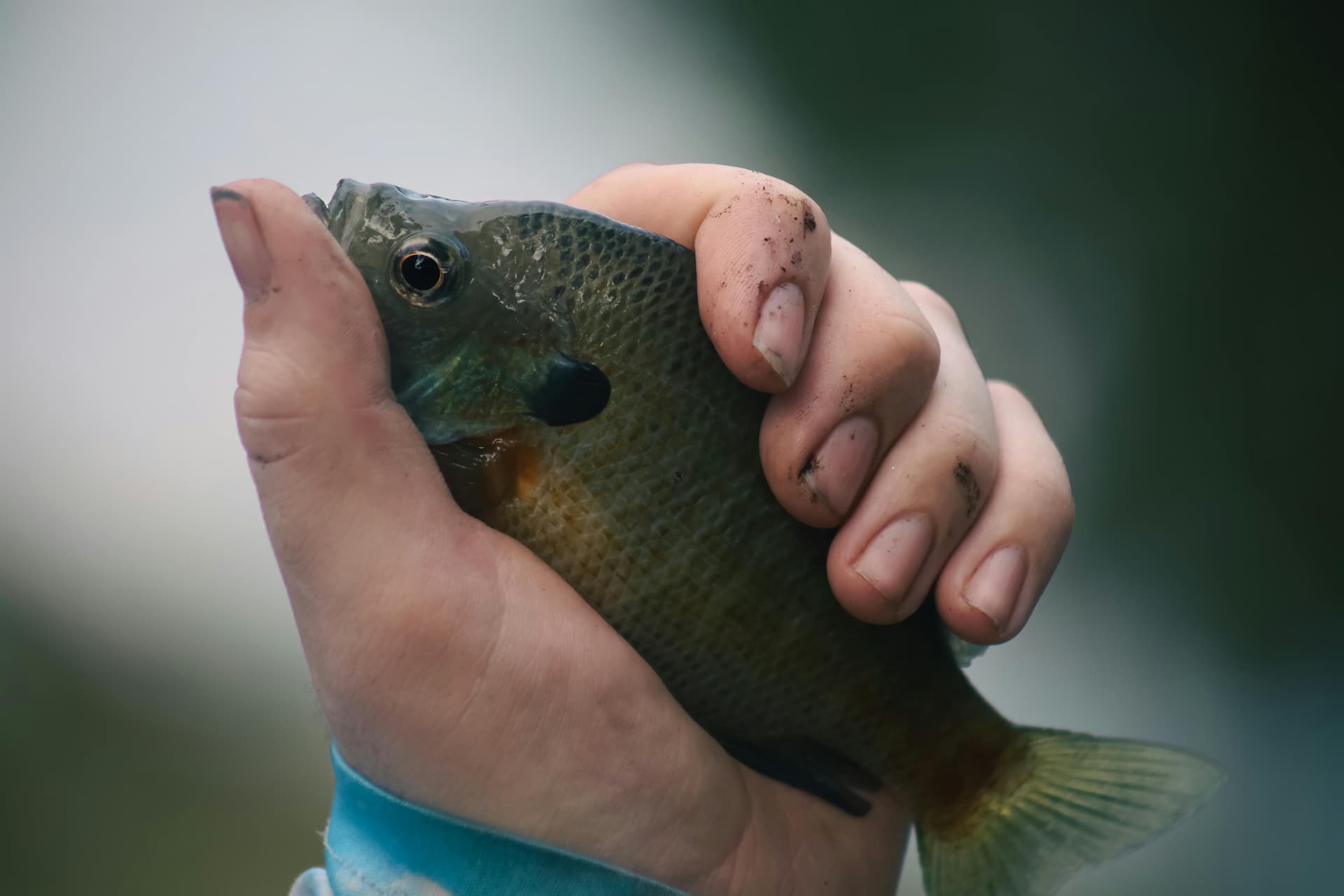
My family has been cleaning fish at the same cabin in Michigan's Upper Peninsula for generations. There's a worn cutting board, a fillet knife that's been resharpened more times than anyone can count, and a general philosophy about cooking fish that I'd describe as: don't overthink it.
Bluegill are perfect for that approach. They're not a fish that needs to be dressed up. They need to be fresh, cleaned right, and cooked simply. That's it.
This isn't a food blog recipe. It's how we actually do it at the cabin.
When to Clean Them
As soon as reasonable after you catch them. Bluegill are best fresh. If you're keeping them alive in a livewell or on a stringer, that helps. If they've been on ice, clean them within a day.
The fish are small enough that cleaning takes about 2–3 minutes per fish once you're comfortable. Do it outside near a hose or water source. It's going to be messy.
What You Need
A sharp fillet knife. Not a dull one. Nothing makes this harder than a knife that won't cut cleanly. A 6-inch flexible fillet blade is ideal.
A cutting board. A bucket or trash bag for guts and scraps. Running water or a hose nearby. That's your whole setup.
Two Ways to Clean Bluegill
Bluegill are small enough that people clean them two different ways, and I've done both depending on the fish size and who's cooking.
Method 1: Fillet them. This is cleaner for eating, takes more skill, and leaves some meat on the carcass (acceptable loss). Lay the fish on its side. Cut behind the pectoral fin down to the spine, then angle the knife along the spine toward the tail, keeping the blade flat against the bones. Lift the fillet off. Flip the fish, repeat. Then use the knife to separate the skin from the fillet if you want skinless. You get two small fillets per fish.
Method 2: Clean and cook whole. Faster, less precision required, and honestly I think the fish tastes better this way. Scale the fish by scraping from tail to head with the back of a knife or a scaling tool. Cut off the head just behind the gills. Gut it by slitting the belly and pulling out the insides. Rinse thoroughly. That's it. You'll eat around the bones at the table, which is not elegant but is how a lot of good fish gets eaten.
For kids or anyone who doesn't want to deal with bones, fillet them. For adults who grew up eating fish this way, whole is fine.
How to Cook Them at the Cabin
There are several things that work well with bluegill, and I'll be straightforward: the simpler the better.
Pan fried with cornmeal crust. This is the classic. Salt and pepper the fish, dredge it in cornmeal or a cornmeal/flour mix, fry in butter or oil over medium-high heat. Cast iron if you have it. Two to three minutes per side for fillets, four to five for whole fish. You want it golden brown. It's ready when it flakes easily at the thickest part.
Foil on a firepit. This is my favorite camp version. Lay cleaned whole fish on a square of foil. Add butter, salt, sliced lemon or lime, and whatever herbs you have. Wrap it tight and put it on hot coals for 8–12 minutes depending on size. The fish steams inside the foil. Comes out clean and flavorful, no frying smell, no cleanup.
Baked in the oven. Same approach as the foil method but at 400 degrees for 12–15 minutes. Works well if you're cooking a bigger batch.
The Part Nobody Mentions
The bones. Bluegill have a row of pin bones running through the mid-section of the fillet. If you're filleting them, run your finger along the fillet to find them and pull them out with needle-nose pliers or fish tweezers before cooking. This is tedious but makes eating much easier, especially if you're serving people who aren't used to eating fish with bones.
If you're cooking whole, just warn people. Everyone who grew up eating panfish knows to watch for bones. Anyone who didn't will figure it out quickly.
On Quantities
Bluegill are small. Plan on 3–4 fish per person for a decent meal if you're going fillets-only. Whole fish, maybe 2–3 per person depending on size. If you've had a good morning on the water and kept a limit, you might have enough for a legitimate meal and some leftovers. If you kept six fish, that's dinner for two.
See also: Bluegill Fishing Tips
That's Actually All There Is To It
Good fishing, a sharp knife, butter, and heat. You don't need a recipe. You need fresh fish and a few minutes. The cabin has been doing it this way for a long time and nobody's complained yet.