
Bluegill Fishing Tips: The Most Underrated Fish in the Lake
Reggie Thompson · May 2, 2026 · 4 min read
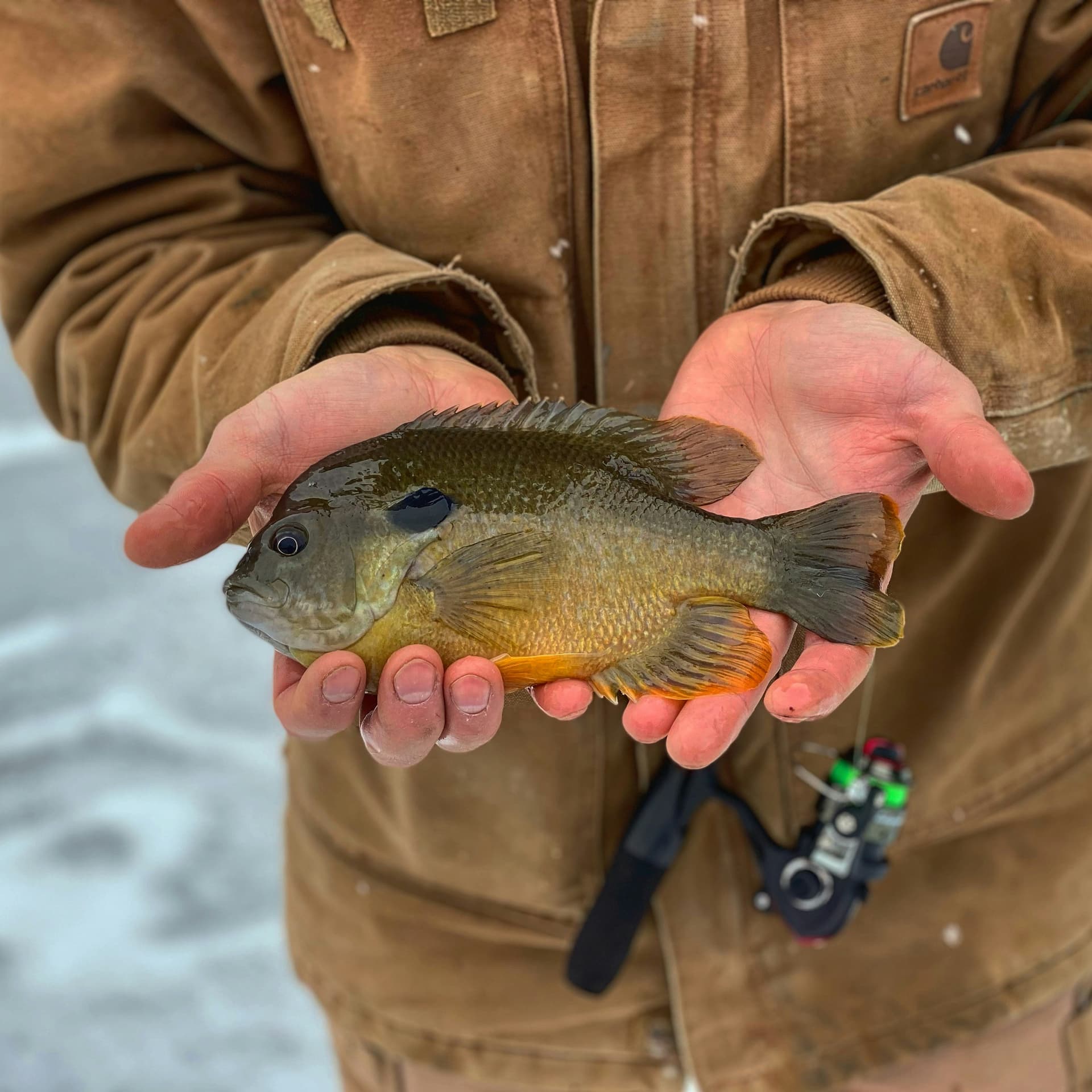
There's a moment every spring at the UP cabin when the bluegill start spawning and the big males come up into the shallows to protect their beds. If you've fished for them when the spawn is on, you know what I mean. They hit hard, they fight like something twice their size, and you can see them in the water before you even cast.
This is supposed to be a kids' fish. Tell that to anyone who's caught a hand-sized bull bluegill on a 4-weight fly rod.
Bluegill are one of my favorite species to fish, full stop. Not just because they're everywhere and easy to find, but because they're legitimately fun to catch and genuinely great to eat. I've been targeting them on the family lake in Michigan's Upper Peninsula for most of my life, and every spring when the spawn rolls around I start thinking about getting back out there.
Here's what I know about catching them.
When to Fish for Bluegill (Spawning Season Is the Peak)
May through June is prime time across most of the Midwest and Northeast. Bluegill spawn in warm, shallow water when temperatures hit the mid-60s to low 70s. They build circular nests in 1 to 4 feet of water, often in sandy or gravel areas near some structure.
During the spawn, the big males are locked onto those beds and will strike almost anything that comes near. It's aggressive, territorial feeding. You're not really trying to trigger a hunger response; you're triggering a protection response. The fish are defending the nest.
This is the best bluegill fishing of the year. After the spawn winds down in July, they scatter into deeper water and become harder to locate and less aggressive. You can still catch them, but the window when they're stacked in the shallows and hitting reliably is relatively short.
Where to Look
Bluegill like structure and warmth. In spring, start shallow. Look for:
Dock edges and pilings. Bluegill use these for shade and cover. The big ones hold just inside the shadow line.
Weed edges. Especially emergent weeds like reeds or cattails near open water. They feed along the outer edge.
Sandy or gravelly bottom in 2–4 feet of water. During spawn, you can often see the beds as light-colored circular depressions. If you're on clear water, polarized sunglasses let you spot them.
Shaded banks. Early morning and late afternoon, big bluegill move into the shadows under overhanging trees.
What to Use
Bluegill aren't complicated. They eat worms, small jigs, crickets, and flies. In my experience:
Live worms are the simplest and most consistent option. Small hook (size 8 or 10), split shot to get it down, small float to read the bite. You're done.
Small jigs in 1/32 to 1/16 oz. are deadly, especially during the spawn. Anything with a small curly tail. Natural colors, white, and chartreuse all work depending on the water clarity.
Dry flies are my personal favorite when they're actively rising to the surface. An elk hair caddis or small adams in size 14–16 gets crushed. If you're already into fly fishing, targeting bluegill is some of the most fun you'll have with a fly rod.
One thing: size your gear down. Light spinning or ultralight tackle makes this actually exciting. If you're throwing 10-pound mono and a 7-foot medium action rod, you'll feel almost nothing. Drop to 4-pound test and a light action rod and these fish get interesting.
Why I'd Rather Eat Bluegill Than Almost Anything Else
This is the part some fishing content skips, but it shouldn't. Bluegill are one of the best eating freshwater fish there is. Mild white meat, flakey, no strong flavor. The pan-sized ones (about 7–9 inches) are perfect for eating whole.
I've cooked them at the UP cabin in ways ranging from elaborate to barely trying, and they're good either way. Fried crispy in butter with a little cornmeal crust is the classic version. Also great in foil on a firepit with butter, lemon, and whatever herbs are around.
The limit in most states is generous for bluegill because the populations are healthy and panfishing is encouraged. Check your state regs, but typically you can keep a good mess without any conservation concern.
The Gear Question
You don't need specialty gear. Bluegill are one of the few fish where you can fish effectively with very simple, inexpensive tackle. If you've got a basic light spinning setup, you're ready.
The one upgrade worth making: polarized sunglasses. Being able to see into the water during spawn season changes everything. You can spot beds, track fish movements, and see the take before you feel it. Not a fishing accessory I'd skip.
One Last Thing
I've taken my nephew out for bluegill. He was seven, short attention span, not interested in standing around waiting. But bluegill hit fast and they hit often, and he caught six in about 40 minutes. He's wanted to go back every summer since.
There's a reason this fish is where a lot of fishing relationships start. It's also why serious anglers shouldn't let that association make them dismiss it. A big bluegill on light tackle in clear water is a good time.