
Scientists Tried to Help Released Trout Recover Faster. It Didn't Work.
Reggie Thompson · September 25, 2026 · 4 min read
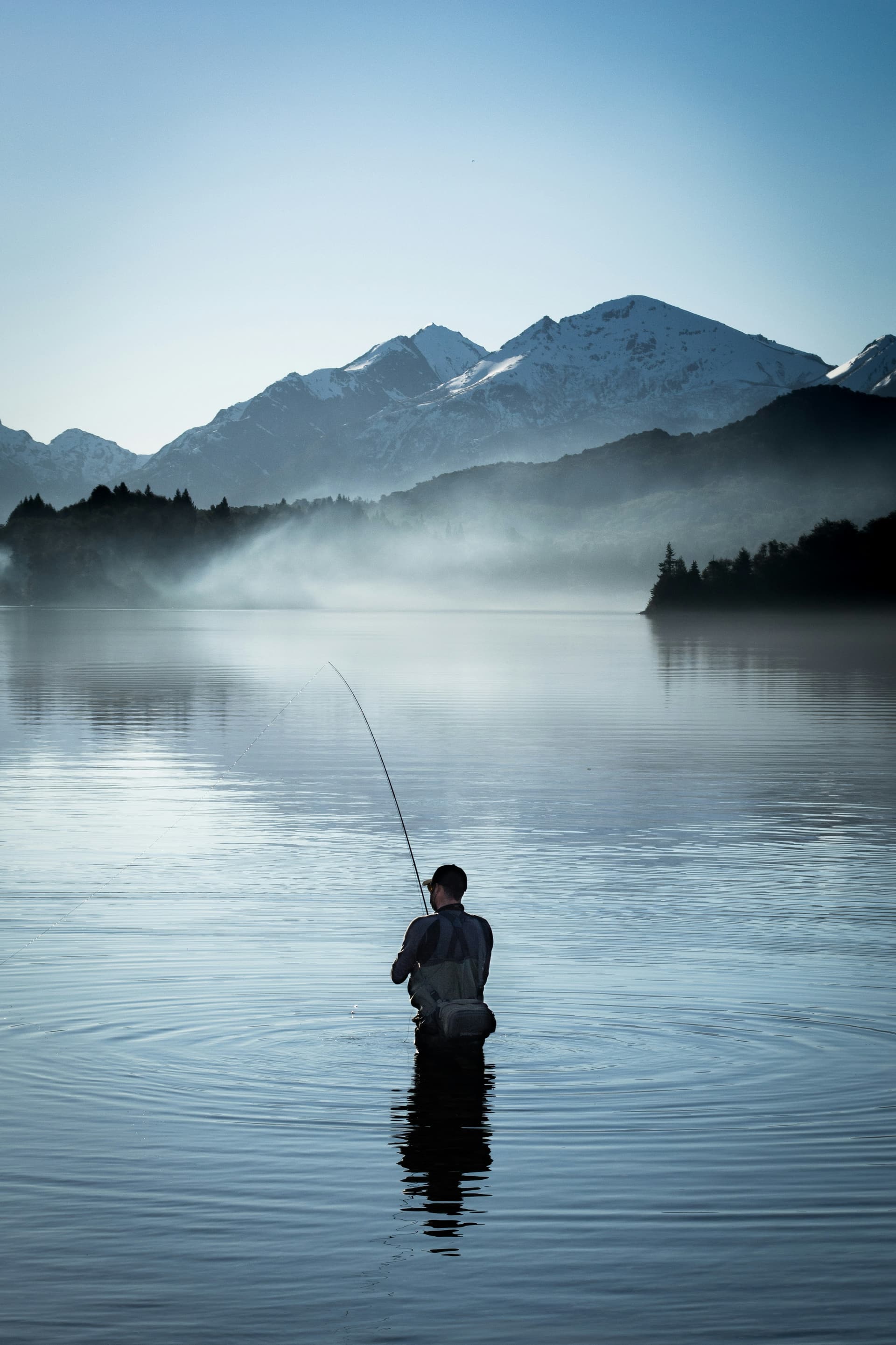
Every angler has heard some version of the advice: don't just chuck a fish back in, hold it a minute so it can catch its breath. A team of researchers in Quebec decided to actually test that on Brook Trout, and they went to real lengths to do it. They caught trout on a small lake, held some at three different water temperatures for five minutes before release, tagged every caught-and-released fish with a transmitter that recorded its temperature and depth, then tracked them for 72 hours inside floating net pens, alongside a separate group of untouched, free-swimming trout tagged weeks earlier as a baseline. The short version of what they found: the holding step barely mattered. How long anglers handled the fish in the first place mattered a lot more, and fish that were never caught at all behaved differently from any of them.
What They Found
The study, published in the North American Journal of Fisheries Management, compared Brook Trout that were released immediately at surface temperature (around 25°C) against fish held for five minutes at 15°C, 18°C, or 21°C before release. Among those four groups, catch-and-release fish across all treatments showed very similar recovery patterns, with predicted temperature differences between any two treatments never exceeding 1.5°C over the 72-hour tracking period. Regardless of holding treatment, released trout gravitated to water around 16.2°C within the first hour, then slowly worked their way down to about 12.8°C by hour 72.
The untouched, free-swimming trout told a different story: they occupied noticeably colder water than any of the caught-and-released fish, a statistically significant difference. In other words, the specific recovery method didn't change much, but simply having been caught and handled at all did.
What mattered most, and this is the part the authors flagged as directly relevant to anglers, was how long each fish spent being handled during tagging. Longer handling times were tied to fish using warmer water after release, a statistically significant effect in the study's model. Six of the 52 catch-and-release trout in the study died. Three of those deaths were in the immediate-release group at the warmest surface temperature, two were in the 21°C holding group, and one was in the 15°C group.
The Catch
The researchers held their C&R fish in floating net pens rather than letting them roam the lake freely, and that setup came with a real limitation: only about 6% of the water column in the study lake had water cool and oxygenated enough to count as good trout habitat during the study period. With that little room to work with, it's possible the pens themselves flattened out any differences between treatments that might show up in a lake with more cool water available. The study also ran during peak summer conditions, with surface water near 25°C, well above the roughly 19.5 to 20°C range the same research group has previously tied to the onset of thermal stress in this species, which lines up with most of the study's deaths clustering in the warmest-water groups. The authors are upfront that their results may not generalize to lake systems with more available cold-water refuge.
How to Actually Help a Released Trout
I fish wild trout pretty regularly in the Sierra Nevada, but I'll be honest, I've never tried anything like a deliberate cooling hold before releasing one, and I'm still working on reading a stream well enough to know exactly where a trout is sitting in the first place. So I can't tell you this study confirms something I already knew from experience. What I can tell you is that it lines up with the general principle behind what actually determines whether a released fish survives and why heat specifically is so hard on fish post-release: the angling part of the interaction is where the damage happens, not the moment right after. The study's authors put it plainly: "Brook Trout handling should be minimized and immediate release prioritized." No fancy holding trick beat just getting the fish back in the water fast. This is one lake, one species, one summer. It's a reason to keep your hands off the fish as much as possible, not a verdict on every assisted-recovery method out there.
Citation
Hodgson, R. Y., LaRochelle, L., Howell, B. E., Thapar, M., Holder, P., Nowell, L., Brownscombe, J. W., & Cooke, S. J. (2026). Behavioral thermoregulation and survival of released Brook Trout following assisted recovery after angling. North American Journal of Fisheries Management. https://doi.org/10.1093/najfmt/vqag070