
Best Tenkara Setup for Small Streams
Reggie Thompson · October 3, 2026 · 6 min read
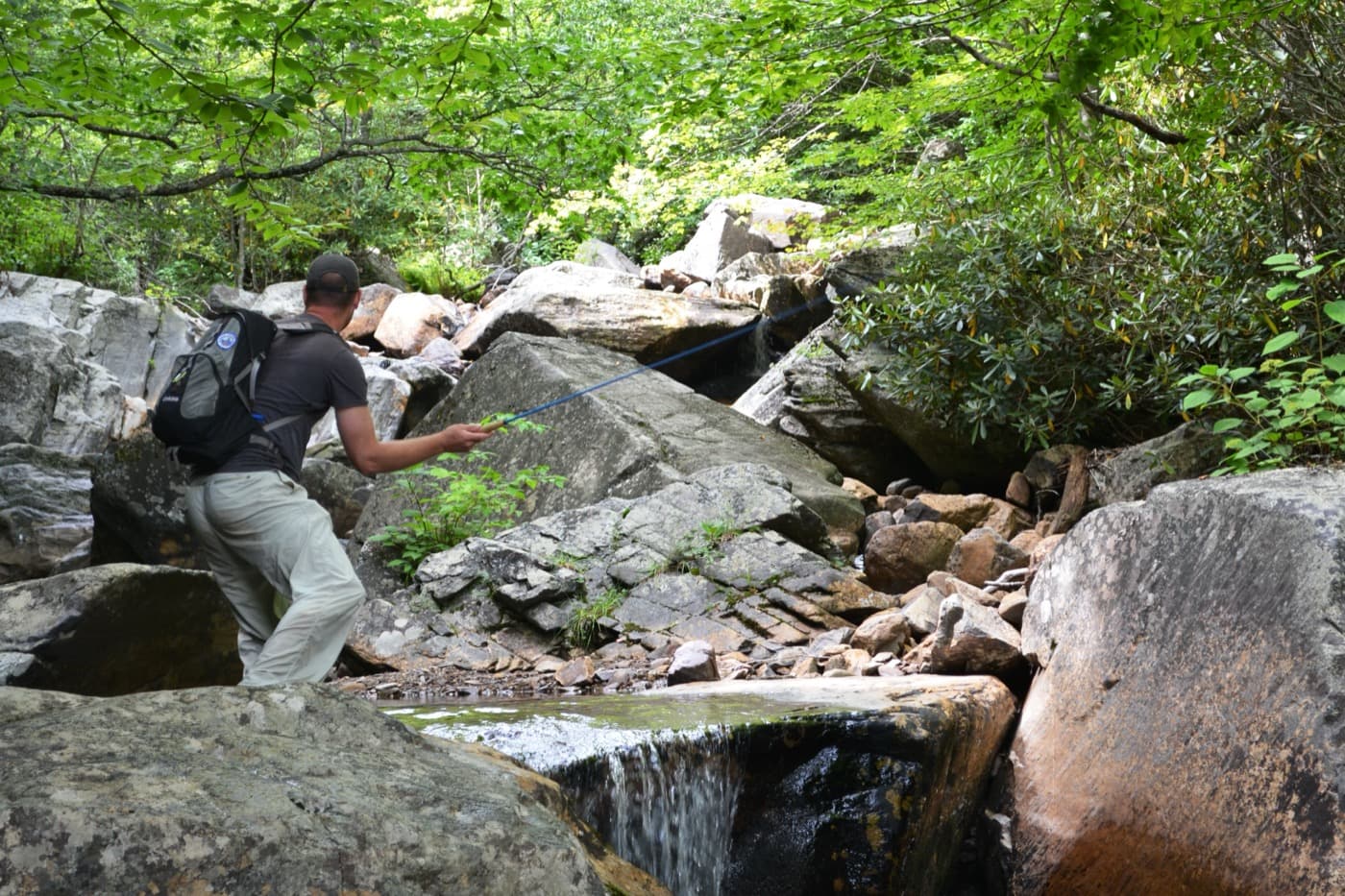
Best Tenkara Setup for Small Streams
The best tenkara setup for small streams is built around control in tight quarters: a rod on the shorter side, a light line kept about the length of the rod, and a handful of simple flies. Small streams are brushy, close-quarters fishing, and the setup that works on a wide river will hang you up in the willows on a mountain creek. Dialing the rig to the water is what makes the difference between a frustrating day of snags and a clean, productive one.
This is the kind of water I fish most, small trout streams in the Sierra Nevada, the tight, tumbling, overgrown creeks where a fish might be holding in a pocket the size of a bathtub. Tenkara is made for exactly this, and after fishing these streams for years with conventional fly gear, the simplicity of a tenkara rig genuinely fits the water better. Here's how I'd set one up. If you're brand new to the method, start with my tenkara setup beginner's guide first, then come back for the small-stream specifics.
Rod: Go a Little Shorter
On open water, a longer tenkara rod (12 to 13 feet) gives you reach and drift control. On a tight small stream, that length becomes a liability, catching brush on the backcast and making it hard to maneuver in close cover. For small, brushy streams, a rod in the 11 to 12 foot range is the sweet spot. It's still long enough to hold line off the water for a clean drift, but short enough to work under overhanging branches and around tight banks.
If your streams are especially tight and overgrown, there are even shorter tenkara rods (down around 9 to 10 feet) made specifically for that kind of water. But for most small-stream fishing, a 12-foot rod with a mid-flex action is a versatile, forgiving choice. A softer flex also protects the light tippet you'll use for spooky small-stream trout.
Line: Short and Light
For small streams, keep your line short. A common mistake is fishing too much line, which gives the current more to grab and makes casting in tight spots harder. Set your line so that the total length of line plus tippet is roughly equal to the rod, or just slightly longer. On a 12-foot rod, that means something like 10 to 12 feet of line and 3 to 4 feet of tippet. Short line means precise casts into small targets and easy fish landing, you can bring a trout to hand without an awkward reach.
Level fluorocarbon line is the small-stream standard once you have a little feel for casting, because it's light, sensitive, and lets you hold more line off the water. If you're still learning to cast, a furled line turns over more easily and is more forgiving. Either works; start with whatever you can cast cleanly and refine from there.
Tippet and Flies: Keep It Simple
Run 4 to 6 feet of light tippet, 5X or 6X for most small-stream trout, tied to the end of your line. Light tippet is less visible to spooky fish in clear alpine water and drifts more naturally.
For flies, tenkara's whole ethos is that presentation beats pattern, and small streams reward that thinking. A few simple flies will cover you: a traditional kebari (the reverse-hackle Japanese pattern), a couple of soft hackles, a small dry fly or two for when fish are looking up, and maybe a small beadhead nymph for deeper pockets. You don't need a loaded fly box. Small-stream trout in the kind of water tenkara suits are usually opportunistic, not selective, and a well-presented simple fly gets eaten. Match the general size of what's hatching and focus on the drift.
How to Fish It
The technique on a small stream is about working upstream, staying low, and hitting every likely pocket with a clean, drag-free drift. Approach from downstream so you're behind the fish (trout face into the current), keep a low profile because these fish spook easily, and cast to the head of each pocket, seam, or plunge pool. Let the fly drift naturally, then lift and move to the next spot.
The long rod held high keeps your line off the varied currents of a tumbling stream, which is exactly what gives you that clean drift. That's tenkara's superpower on small water, and it's why the method fits these streams so well. If reading that water is still new to you, my guide on catching trout from shore covers the basics of where fish hold, and it applies directly here.
The Small-Stream Advantage
The reason tenkara shines on small streams isn't just tradition, it's practical. There's less gear to snag in tight cover, the rig weighs almost nothing for the hike in, and the long rod gives you drift control that's genuinely hard to match with a conventional setup on close water. Pack the rod, a spool of line, a small box of simple flies, and some tippet, and you're equipped for a full day working a mountain creek. For the kind of light, hike-in trout fishing a lot of us love, it's hard to beat.
Small-Stream Tenkara FAQ
What is the best tenkara rod length for small streams? An 11 to 12 foot rod is the sweet spot for most small streams, long enough for good drift control but short enough to handle brush and tight cover. For especially overgrown creeks, shorter rods around 9 to 10 feet exist specifically for tight water.
How long should my tenkara line be on a small stream? Keep the total line plus tippet roughly equal to the rod length or slightly longer. On a 12-foot rod, that's about 10 to 12 feet of line plus 3 to 4 feet of tippet. Short line gives precise casts into small targets and makes landing fish easy.
What flies work best for tenkara on small streams? A few simple patterns cover most situations: a traditional kebari, soft hackles, a small dry fly, and a small beadhead nymph. Small-stream trout are usually opportunistic, so presentation and a clean drift matter more than exact fly pattern.
What line should I use for small-stream tenkara? Level fluorocarbon line is the standard for its light weight and sensitivity once you can cast it. Beginners may prefer furled line, which turns over more easily and is more forgiving. Both work well on small streams.
Why is tenkara good for small streams? Tenkara excels on small streams because the long rod holds line off varied currents for a clean, drag-free drift, there's less gear to snag in tight cover, and the whole rig is light enough to hike in easily. It suits close-quarters, pocket-water trout fishing better than a conventional setup.
Hero photo: Virginia State Parks via Wikimedia Commons, CC BY 2.0.
.jpg)