
Tenkara Fly Fishing Setup: A Beginner's Guide
Reggie Thompson · October 1, 2026 · 6 min read
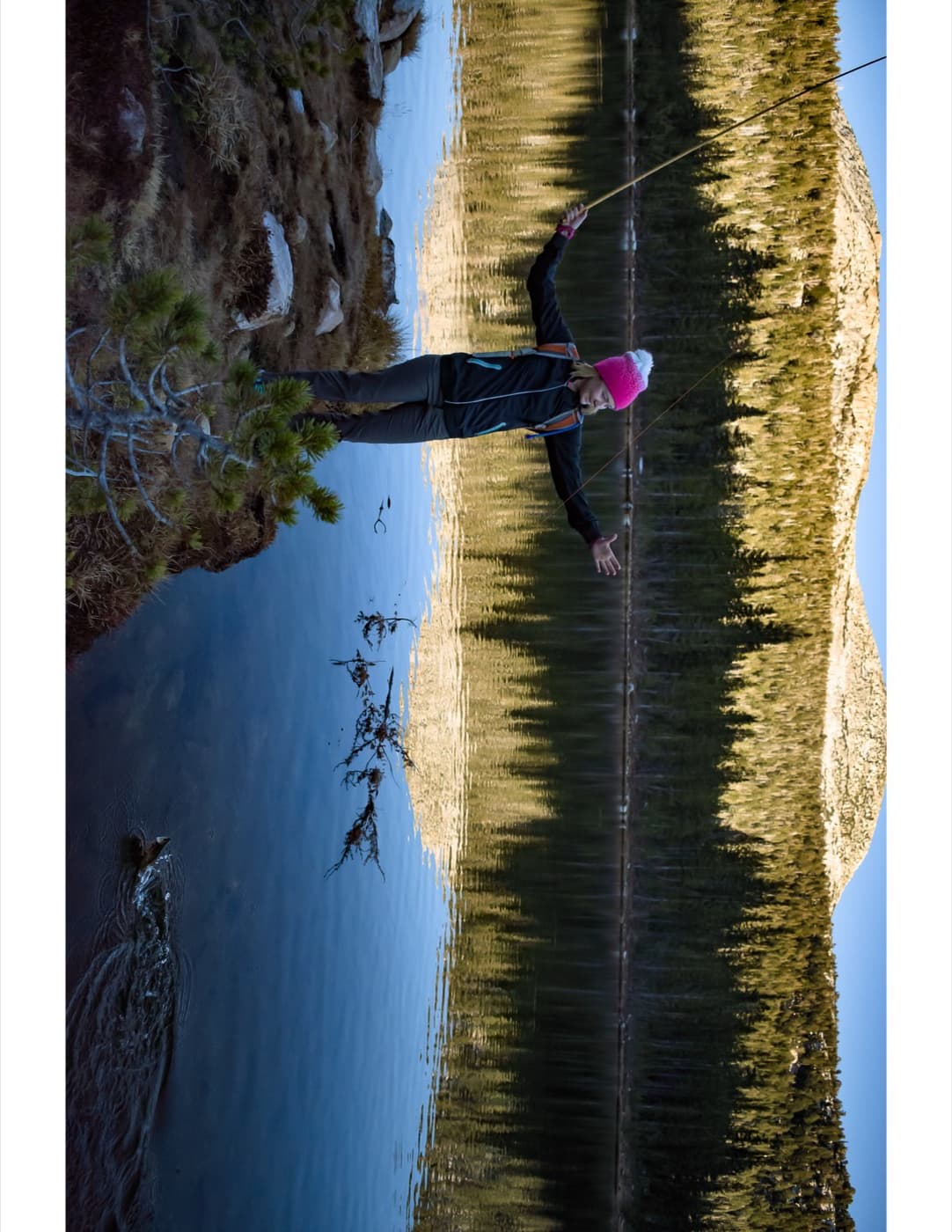
Tenkara Fly Fishing Setup: A Beginner's Guide
Tenkara is fly fishing stripped down to its essentials: a long telescoping rod, a fixed length of line tied to the tip, a bit of tippet, and a fly. No reel, no line management, no false-casting a heavy fly line thirty feet. It's a Japanese method built for small mountain streams, and the entire setup fits in a jacket pocket. If you've ever looked at a trickle of a creek and thought a full fly rig was overkill, tenkara is the answer.
I came to tenkara from regular fly fishing, which I picked up in my thirties for the trout streams out here in the Sierra Nevada. Learning to cast a fly line was genuinely hard, the whole trick of casting the line instead of the fly took me a long time to internalize. Tenkara appealed to me precisely because it throws most of that complexity out. It's the kind of fishing that matches small alpine water and a pack-light approach, and it's a lot easier to get started with than conventional fly fishing.
What Tenkara Actually Is
Tenkara comes from Japan, where it was used by mountain stream anglers to catch trout and char in tight, fast, high-gradient water. The philosophy is simplicity: instead of managing yards of fly line off a reel, you fish a fixed line roughly the length of the rod, presenting a fly with delicacy and control at short range.
The rod does the work a reel and fly line normally would. Tenkara rods are long, usually 11 to 13 feet, and telescope down to about the length of your forearm for travel. That length gives you reach and lets you keep line off the water for a drag-free drift, which is the whole game in stream trout fishing. You're not casting far. You're presenting a fly precisely, right where the fish are holding, with almost nothing between you and the drift.
The Parts of a Tenkara Setup
There are only four things in a tenkara rig, which is the beauty of it.
The rod. A telescoping, reel-less rod, typically 11 to 13 feet. Rods are described with a "flex" rating (like 6:4 or 7:3) that tells you how stiff or soft the action is. A softer rod protects light tippet and makes casting easier to learn; a stiffer rod handles bigger flies and wind better. For a beginner, a mid-flex rod around 12 feet is a great all-around starting point.
The line. Tied to the tip of the rod (to a small braided loop called a lillian). There are two common types: level line, a single diameter of fluorocarbon that's light and precise, and furled or tapered line, which is a bit easier to cast for beginners because it turns over more smoothly. Many people start with a furled line and move to level line as they develop feel.
The tippet. A short section of light monofilament or fluorocarbon (often 4 to 6 feet) tied to the end of the line. This is the near-invisible connection to the fly and the part designed to break first if you snag.
The fly. Traditionally a simple pattern called a kebari, often with a reverse-facing (sakasa) hackle. Tenkara purists fish a small number of simple flies and rely on presentation over pattern. In practice, you can fish standard trout flies too, small dries, soft hackles, and nymphs all work.
How to Rig It
Rigging a tenkara rod takes about a minute once you've done it once.
- Extend the rod fully, starting from the tip section and working down, until it's at full length.
- Attach your line to the lillian at the rod tip, usually with a simple girth hitch or a loop-to-loop connection.
- Tie a few feet of tippet to the end of the line with a simple knot.
- Tie your fly to the tippet.
That's the whole setup. A good rule of thumb is to keep your total line-plus-tippet length around the length of the rod or a little longer to start, which keeps casting manageable and lets you reach the fish while still being able to land them.
Casting Is Simpler, Not Effortless
Tenkara casting is much easier to learn than conventional fly casting, but it's not nothing. The motion is a crisp, compact stroke, more of a flick than the long sweeping cast of a fly rod, using the rod's flex to send the light line out and lay the fly down softly. Because the line is fixed and light, there's no line to strip, mend by hauling, or manage at your feet. You cast, you drift, you lift, you cast again.
The thing tenkara does beautifully is the drag-free drift. That long rod lets you hold almost all the line off the water, so the fly drifts naturally without the current dragging it. On small streams, that clean drift is what catches fish, and tenkara makes it easier than a conventional rig does.
Why the Simplicity Is the Point
It's tempting to see tenkara as a gimmick or a limitation. It isn't. On the small, tight, brushy streams it's built for, the simplicity is an advantage. There's less gear to snag in overhanging brush, less to fumble with cold hands, less standing between you and a clean presentation. You can hike miles into an alpine drainage with the rod in a pack and be fishing thirty seconds after you reach the water.
It won't replace a fly reel for big water, long casts, or hard-running fish, that's not what it's for. But for small-stream trout, for backpacking into high country, for anyone who wants to fish light and keep it simple, tenkara is a genuinely great way to fish. It's the closest thing to just a rod, a fly, and a fish that I've found.
Tenkara Setup FAQ
What do you need for a tenkara setup? Just four things: a telescoping tenkara rod (typically 11 to 13 feet), a fixed line tied to the rod tip, a few feet of tippet, and a fly. There's no reel and no heavy fly line. The entire setup fits in a jacket pocket.
Is tenkara easier than regular fly fishing? Yes, in most ways. Tenkara removes the reel, the heavy fly line, and the line management that make conventional fly casting hard to learn. The casting motion is simpler and the drag-free drift is easier to achieve, which makes it a great entry into fly fishing on small streams.
How long should a tenkara rod be? Most tenkara rods are 11 to 13 feet, with 12 feet a great all-around length for beginners. The length gives you reach and lets you hold line off the water for a natural drift. Shorter rods suit tight, brushy streams; longer rods suit more open water.
What fish can you catch with tenkara? Tenkara is designed for stream trout and char, and it excels at that. It works for panfish and other small species too. It's not built for big fish, long casts, or large open water, where a conventional rod and reel is the better tool.
What line does tenkara use? Tenkara uses either level line (a single diameter of fluorocarbon, light and precise) or furled/tapered line (easier to cast for beginners). The line ties directly to the rod tip, and a few feet of light tippet connects it to the fly. Many beginners start with furled line.
Hero photo: Tlima314 via Wikimedia Commons, CC BY-SA 4.0.
