
Roll Casting for Beginners: How I Finally Got It
Reggie Thompson · May 19, 2026 · 7 min read
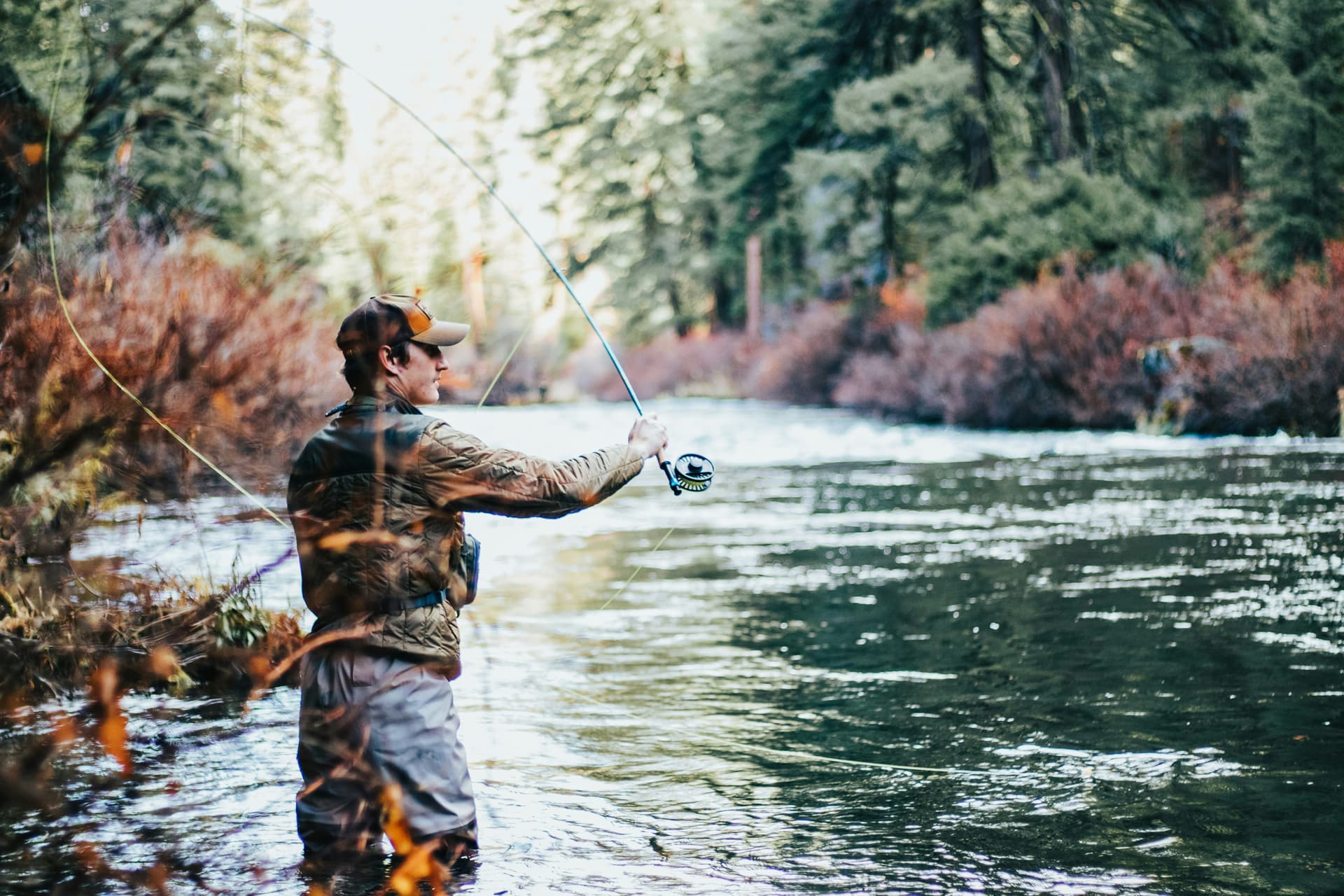
Roll Casting for Beginners: How I Finally Got It
Roll casting is the fly cast you'll use most often on real fishing water. It's also the one most beginners skip because it looks simple and feels awkward, and they move on before it actually clicks.
I was one of those people. I learned the basic overhead cast, got reasonably comfortable with it, started catching fish, and told myself roll casting was something I'd work on later. Later kept getting pushed back. Then I had a trip where there were trees 10 feet behind me on a steep bank, I couldn't throw a backcast, and I spent the day watching risers I couldn't reach.
After that I actually learned it. Here's what finally made it click.
What Roll Casting Is and Why It Matters
A roll cast is a cast made entirely in front of you, with no backcast. You drag the fly line back along the water surface to create tension and resistance, then sweep the rod forward in a smooth arc. The line rolls out in a loop ahead of you.
Why you need it: Most fishing situations don't give you unlimited space behind you. Banks, trees, brush, canyon walls. The overhead cast requires clearance. Roll casting works anywhere. If you fish streams, rivers, or anywhere with vegetation, it's the most practically useful cast in your skill set.
The standard overhead cast you learned in a parking lot with 30 feet of clear space behind you is often useless in real fishing conditions. Roll casting is what actually gets the fly in the water.
Why Beginners Struggle With It
The roll cast fails for beginners in two predictable ways:
The line doesn't have enough resistance. The cast loads off the friction of the line against the water surface. If you lift the line too high before initiating the forward sweep, you lose that friction and the cast collapses. The line needs to stay in contact with the water right up until you sweep forward.
The forward stroke is too abrupt. Most beginners snap the rod forward like they're throwing a baitcast. Roll casting requires a slower, smoother arc, more like you're painting a stroke on a wall, starting high and driving the rod tip forward on a downward plane. Snap it and the loop blows out.
I did both of these things for longer than I'd like to admit.
The Mechanics, Step by Step
Step 1: Let the line settle. After your last cast, let the line lay out on the water in front of you. You need it to be relatively straight and extended.
Step 2: Raise the rod slowly. Lift the rod tip upward and back, slowly, not a snap, until the rod is at about 1 o'clock, or just past vertical. The line should drag back along the water surface toward you, forming a D-loop: a curved section of line hanging between your rod tip and the water. This is your load.
Step 3: Pause briefly at the top. Let the D-loop form fully. Don't rush into the forward stroke.
Step 4: Drive the rod forward and down. Sweep the rod forward in a smooth, accelerating stroke, stopping sharply at about 10 o'clock, angled slightly downward. The stop is critical, it's the stop that turns the rod's energy into the rolling loop.
Step 5: Watch the loop. A good roll cast produces a loop that unrolls in the air above the water, then the leader turns over and the fly lands gently. If you're getting a pile of line, you stopped too early or your D-loop collapsed.
How I Finally Got It
I practiced at Golden Gate Park's casting ponds. Concrete edges, no hazards, flat water, no pressure to catch fish. I could make the same cast 50 times in a row, watch what happened, adjust, repeat.
Two things made the difference:
I slowed down the lift. I had been raising the rod much too fast, which lifted the line off the water instead of dragging it back along the surface. Slowing the lift dramatically improved D-loop formation.
I added a deliberate pause. There's a moment when the D-loop is fully formed where you should actually pause and let things settle before initiating the forward stroke. I was skipping this pause entirely and starting forward too early. Adding even a one-second pause changed the cast completely.
The other thing that helped: I moved closer to targets. Most of my failed roll casts were attempts to throw too far. At 25–30 feet, the cast is much more manageable than at 50 feet. Build confidence at shorter distances before trying to extend.
Where to Practice
If you have access to a casting pond or open water, use it. The goal is to make roll casts without the pressure of needing to catch fish. Standing in a river trying to learn it while fish are rising is hard mode.
If you're learning in California, Golden Gate Park in San Francisco has free casting ponds that are genuinely useful for exactly this. Other cities have similar resources, look for fly fishing clubs in your area, as many run free or low-cost casting clinics.
If you have a backyard with any grass, you can practice there too. The cast doesn't require water, though the lack of surface tension means the feedback is slightly different.
Roll Casting on Real Water
Once the basic cast clicks in practice, the real skill is reading where you have room. A roll cast can be thrown from tight angles and in tight spaces, but it helps to understand your constraints before you're in them.
Stand before you wade and look at what's behind you. Identify where the trees, brush, or bank start. That tells you what casts you have available. If you have 5 feet of clearance, you're roll casting. If you have 30 feet, you can overhead cast. Most real streams fall somewhere in between.
My honest opinion: if I were starting fly fishing again from zero, I'd spend the first two practice sessions doing nothing but roll casts. Not the overhead cast everyone teaches first. The roll cast. It's the one you'll actually use on a stream, and building the muscle memory early means you're not improvising when you need it on a real fishing trip. The overhead cast comes easily once you understand timing. The roll cast takes longer to groove and is harder to learn under pressure.
The cast you need most is rarely the one you practiced the most. That was true for me. Spend time on roll casting. You'll use it more than anything else.
Roll Casting FAQ
What is roll casting in fly fishing? Roll casting is a fly fishing cast that works without a backcast. You drag the line back along the water's surface to create tension (forming a D-loop), then sweep the rod forward. The line rolls out in a loop ahead of you. It's the primary cast for fishing in tight spaces where you can't throw a traditional overhead cast.
Is roll casting hard to learn? It's moderately difficult for beginners, harder than it looks, easier than the overhead cast. Most people struggle with two things: not keeping the line on the water surface during the lift, and rushing the forward stroke. With deliberate practice at a casting pond, most beginners can get a functional roll cast in a few sessions.
Can you roll cast with a spinning rod? No. Roll casting is a fly fishing technique specific to fly rods and fly line. It doesn't work with spinning or baitcasting equipment because those systems rely on lure weight rather than line weight to carry the cast.
How far can you roll cast? A competent roll cast can reach 30–45 feet. Expert casters can extend it further with a double haul variation. For most fishing situations, reaching a rising trout 20–30 feet away in tight quarters: a basic roll cast is all you need.