
Portable Fish Finders: Are They Worth It?
Reggie Thompson · July 27, 2026 · 5 min read
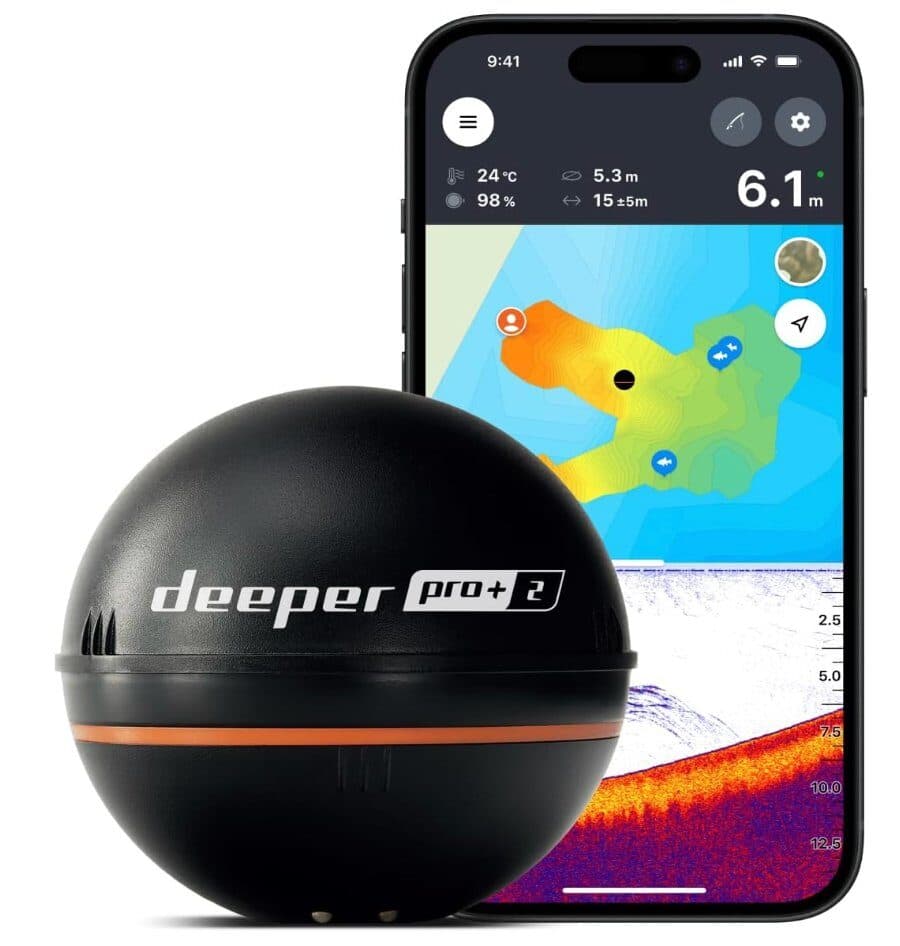
There's a version of fish finder advice that treats portable castable units like the Deeper PRO+ 2 as novelties — cute gadgets for kids or bank fishermen who don't know any better. That's not quite right. But there's also a version that oversells them as a complete replacement for a mounted sonar unit. That's not right either.
The honest answer is that castable fish finders are genuinely useful for a specific type of angler and a specific set of situations. They're also genuinely limited in ways that traditional fish finders are not. Whether they're worth it depends almost entirely on how you fish.
What a Castable Fish Finder Actually Is
A castable fish finder is a small, waterproof sonar unit — usually roughly the size and shape of a hockey puck — that you clip to your fishing line and cast. It floats on the surface, the sonar pings downward, and it transmits the return to an app on your phone via Wi-Fi or Bluetooth.
Your phone screen becomes your fish finder display. No transducer to mount, no battery to wire, no RAM mount to deal with. You cast it, open the app, and see what's below it.
The three units worth knowing about:
Deeper PRO+ 2: The most capable castable unit on the market. Built-in GPS, three-beam sonar (15, 55, and 125 kHz), 330-foot depth range, and it works for ice fishing through a drilled hole. MSRP around $200.
Garmin Striker Cast GPS: Garmin's version. GPS included, connects to the Garmin Quickdraw app for mapping, solid sonar performance. MSRP around $170. Non-GPS version available for around $100.
Deeper START: The entry-level Deeper unit. No GPS, single-beam sonar, 165-foot depth range. Around $80. Reasonable if you just want to check depth from a bank.
Where They're Genuinely Useful
Bank fishing. This is the strongest use case. When you're fishing from shore and can't access the water directly in front of you, casting a sonar unit out and reading what's there is legitimately valuable. You can check depth, find drop-offs, locate submerged structure — information you'd have no other way to get without a boat. For bank anglers, this is a real tool, not a toy.
Kayak fishing without a mounted unit. If you don't want to deal with RAM mounts, battery wiring, and transducer hardware, a castable unit on a kayak is a reasonable compromise. You sacrifice some functionality but gain a lot of simplicity. Cast it out before paddling into a spot. Check structure to your side by casting perpendicular to the kayak.
Ice fishing. Drop it through a hole, read the sonar return in the app. The Deeper PRO+ 2 in particular works well in this application because it pulls double duty — same unit you use for bass in July, you're using for walleye through the ice in January.
Scouting unfamiliar water before committing. Cast it along a bank, check depth across a flat, figure out where the drop-off is before fishing it. Useful as a pre-fish tool even if you have a mounted unit on the boat.
Where They Fall Short
Real-time boat fishing. A mounted fish finder on a boat shows you what's below you continuously as you move. A castable unit shows you what's below where it's floating, which is where you cast it. Those are different things. If you're running a bank or trolling a point, a mounted unit beats a castable unit every time.
Glare and phone battery. Your phone screen in direct sunlight is harder to read than a dedicated fish finder display with a backlit anti-glare screen. You'll be cupping your hand over the phone, burning phone battery, and squinting. On a long summer day, this gets old. Dedicated fish finder screens handle sun better.
Wi-Fi reliability. The connection between the unit and your phone drops occasionally, especially in windy conditions when the castable unit moves around on the surface. It's not constant, but it's enough to be occasionally annoying.
Depth rating in fast current. Castable units float on the surface. In river current, they drag and move, making sonar returns inconsistent. They're designed for still or slow-moving water.
Who Should Buy One
Yes, buy it if:
- You fish from the bank regularly on lakes or ponds you don't know well
- You're a kayak angler who wants electronics without the mounting hassle
- You ice fish in addition to open-water fishing and want one unit for both
- You travel to fish and don't want to pack a mounted fish finder setup
Skip it if:
- You fish primarily from a motorized boat and want a traditional sonar experience
- You spend most of your time covering water at speed
- You fish rivers with significant current
- Your phone is already your navigation, communication, and music device — adding fish finder to that role on a full day of fishing will drain the battery
My Take
The Deeper PRO+ 2 is a good piece of gear for what it is. I wouldn't use it as a replacement for a mounted fish finder on a boat, but for bank fishing or kayak situations where mounting a traditional unit isn't practical, it fills a real gap. The ice fishing versatility is a genuine bonus if that's part of your season.
The Garmin Striker Cast GPS is worth considering if you're already invested in the Garmin ecosystem — the Quickdraw mapping integration is useful for building personal depth maps of your home water.
If you fish exclusively from a boat with a proper console, save the $200 and put it toward a better mounted unit.