
Best Fish Finder for a Kayak: What Actually Works
Reggie Thompson · July 23, 2026 · 6 min read
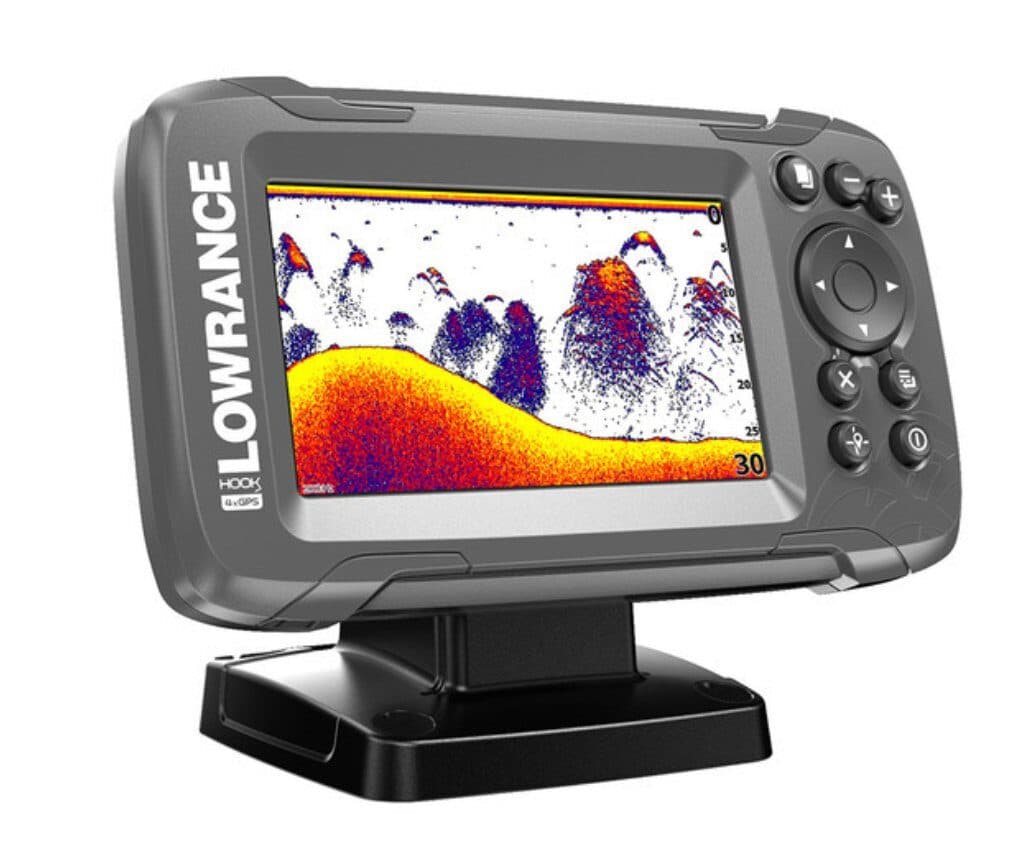
Fishing without a boat changes a few things. You're lower to the water, your gear has to be lighter, and you're working with a different set of mounting options than someone with a 17-foot aluminum boat and a console. Fish finders that work great on a jon boat can be a pain on a kayak for reasons that don't show up in any spec sheet.
I fish without a car, which means I fish without a trailer. Most of my water access is on foot or via rideshare, which has pushed me to think hard about what makes gear portable and practical versus what just adds weight and hassle. Fish finders on a kayak is one of those questions where the "best fish finder" answer and the "best kayak fish finder" answer are not the same thing.
Here's what actually makes sense if you're fishing from a kayak.
What's Different About a Kayak Setup
Battery. A traditional fish finder runs on a 12-volt battery. On a boat, that's the boat battery. On a kayak, you're carrying it. Lead-acid batteries that work fine on a boat weigh 15-20 pounds. A small lithium battery that powers a fish finder for a full day weighs 2-3 pounds and fits in a milk crate. The battery question is not an afterthought on a kayak.
Mounting. Kayaks have flush-mount rod holders, track systems (like RAM Track or Scotty), and scupper holes. Most fish finders are designed to bolt to a surface — that's fine with a RAM mount, but you need to think about where you're actually putting it. It needs to be visible while paddling, secure in rough water, and not in the way of your rod holders.
Transducer placement. The transducer has to go underwater. On a kayak, the typical solutions are: suction cup mount on the hull, shooting through the hull (works through fiberglass only, not rotomolded plastic), or running it through a scupper hole. Each has tradeoffs. Suction cups work but can pull off in weeds or at speed. Scupper mounts are clean and permanent but require the right hardware.
Portability vs. permanence. If you fish from a single kayak that lives in a garage, a permanent mount is fine. If you rent, borrow, or fish from multiple boats, a unit that packs up quickly matters. That changes which unit makes sense.
The Best Fish Finders for Kayak Anglers
Garmin Striker 4 — Best Budget Kayak Option
The Striker 4 shows up in nearly every kayak fishing setup recommendation and it's earned that position. At about $99, the screen is small (3.5 inches) but the CHIRP sonar is solid, GPS lets you mark spots, and the whole unit is compact enough to mount almost anywhere. It pairs well with RAM mounting hardware and draws very little power from a small battery.
For kayak fishing specifically, the Striker 4's compact size is an advantage, not just a cost thing. A 9-inch chartplotter on a kayak is overkill and physically awkward. The Striker 4 stays out of the way.
The standard suction cup transducer included with the Striker 4 works on kayaks, though a proper RAM or Scotty-mounted bracket is worth the extra few dollars for reliability.
[LINK: Garmin Striker 4 — FishUSA]
Garmin Striker Vivid 4cv — Best Upgrade Pick for Kayaks
If you're willing to spend around $160-180, the Striker Vivid 4cv adds ClearVü scanning sonar to the Striker 4's feature set. The 4-inch screen is a meaningful step up in readability over the 3.5-inch Striker 4, and ClearVü shows structure in much more detail than standard sonar.
From a kayak, that matters because you're often fishing structure — laydowns, dock pilings, rock piles — where seeing the shape of what's below you helps you figure out exactly where to present a bait. Standard sonar tells you something is there. ClearVü shows you what it is.
Still runs fine on a small lithium battery. Same mounting footprint as the Striker 4.
Humminbird Helix 5 CHIRP GPS G3 — Best Full-Featured Option
The Helix 5 works on a kayak, though it's at the larger end of what makes sense. The 5-inch screen is genuinely easier to read in direct sunlight than smaller units, which is a real advantage on open water. CHIRP sonar is excellent. GPS with basemap is useful for larger lakes where you're covering water.
The tradeoff is size and power. The Helix 5 draws more current than the Striker units. On a full day on the water, a 7-10 Ah lithium battery is the minimum. Not a problem if you're organized, but worth factoring into your total kit weight.
If you're a kayak angler who fishes lakes seriously and wants a unit that performs at the level of what you'd put on a boat, the Helix 5 is the call. If you're primarily fishing rivers and small ponds and want to keep things simple, the Striker Vivid is probably enough.
Deeper PRO+ 2 — Best Option for Anglers Who Want Maximum Flexibility
The Deeper PRO+ 2 is a castable fish finder — a hockey-puck-sized sonar unit that you attach to your line and cast. It connects to your phone via Wi-Fi and uses the Deeper app as its screen. There's no mounting hardware, no transducer bracket, no separate battery, no permanent installation.
On a kayak, this creates a few specific advantages. You can cast it to check depth and structure before paddling to a spot. You can use it from the bank if your kayak is on shore. It works for ice fishing through a hole. One unit serves multiple purposes.
The limitations: your phone is the screen, which means glare on sunny days and battery drain on long outings. The Wi-Fi connection occasionally drops in windy conditions. And the casting-sonar approach is genuinely different from traditional fish finding — you're not reading it in real time as you paddle over fish.
For kayak anglers who prioritize flexibility over a traditional sonar experience, it's worth considering. For anglers who want a true fish finder experience on a kayak, one of the mounted units above will serve you better.
[LINK: Deeper PRO+ 2 — FishUSA]
Battery Recommendations for Kayak Electronics
Small lithium option (best overall): A 7Ah or 10Ah 12V lithium battery from a brand like Bioenno or Dakota Lithium runs $60-100 and will power a Striker 4 or Helix 5 for a full day with plenty of reserve. Weighs 2-3 pounds. This is the right call for most kayak anglers.
Budget option: A sealed lead-acid 7Ah battery works fine electrically but weighs around 5-6 pounds. Fine for a sit-inside kayak with accessible storage; heavier than necessary for a sit-on-top where weight distribution matters.
Wiring is straightforward — fish finder units use a standard SAE connector or bare wires with a fused lead. Nothing complex.
What I'd Actually Do
If I were putting electronics on a kayak and fishing mostly smallmouth and bass on mid-sized lakes, I'd go with the Garmin Striker Vivid 4cv on a RAM mount, a 7Ah lithium battery in the crate, and a suction cup transducer on the hull. That whole setup costs under $250 all-in and does everything a kayak angler actually needs.
If I were fishing larger lakes or wanted something I'd never want to upgrade, I'd pay the difference and go Helix 5. It's a better unit. The question is whether the extra capability matches how you actually fish.