
Biologists Compared Whitefish Caught by Anglers to Whitefish Caught by Electrofishing. Here's What Matched.
Reggie Thompson · November 6, 2026 · 4 min read
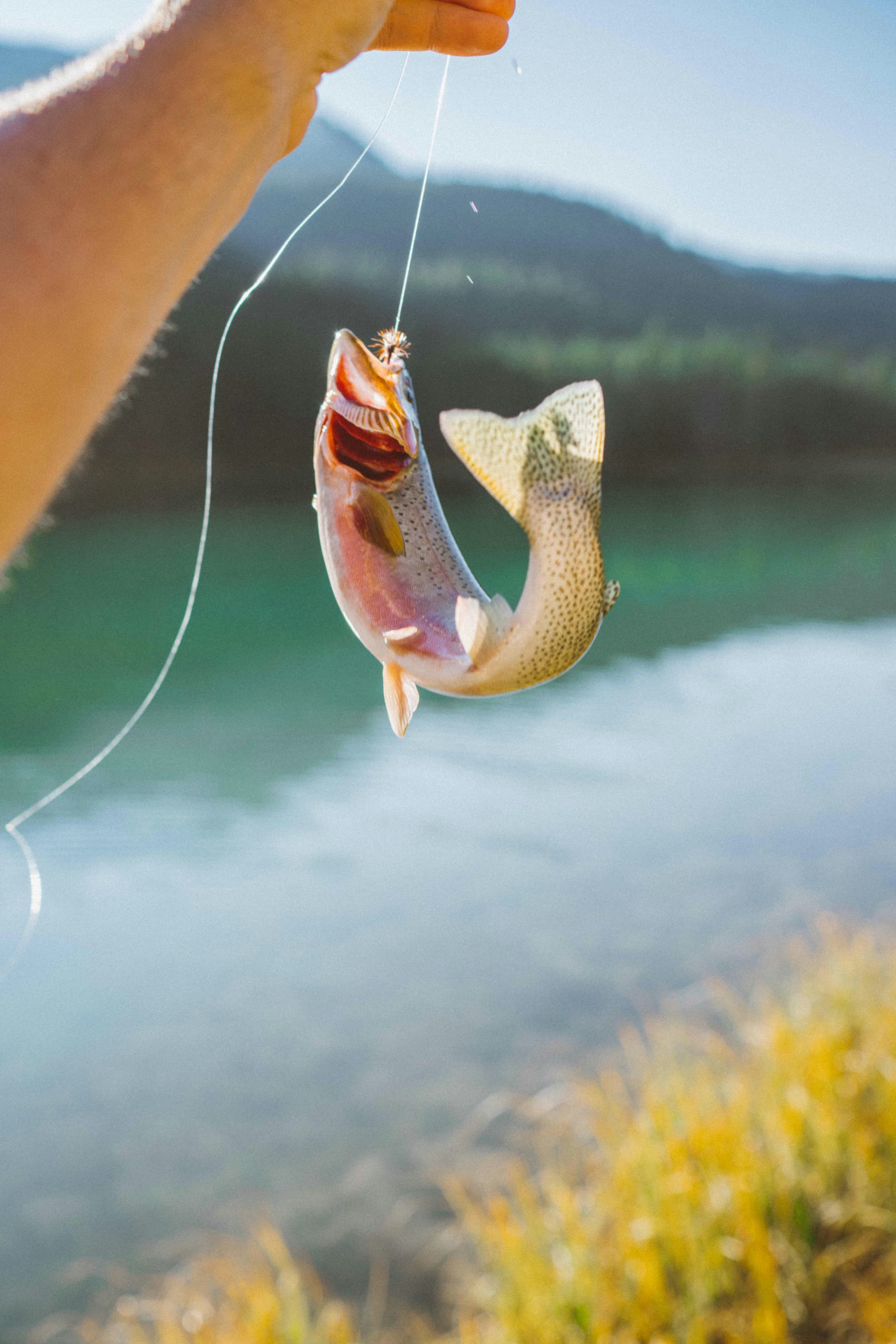
Most of us treat a fish on the end of the line as the end of the story. For a team in Idaho, it was the start of the data. They wanted to know whether mountain whitefish caught by anglers tell biologists the same things as whitefish sampled with electrofishing gear. For mountain whitefish in the Clearwater River, some results were close and some were not, with differences that are interesting in their own right.
What came out different, and why that matters
Start with the differences, because they're the part you'd want to know before trusting any of this.
The two methods did not catch the same crowd. According to the authors, electrofishing gear produced fish that were generally smaller and spread over a broader range of lengths than the angled fish. The angled sample had nothing under 239 mm, and its largest fish was 521 mm. Electrofishing caught fish from 192 to 560 mm.
Growth looked a little different too. Back-calculated lengths at age suggested that angled whitefish grew slightly faster, though the growth-model estimates showed only minor differences between the two methods.
Then there's the diet signal. Stable isotope analysis suggested that these whitefish eat other fish at least some of the time, and that the ones caught by angling sat at a higher trophic level than the electrofished ones. The authors offer a possible reason as a hypothesis: fish higher up the food chain may be more likely to hit the artificial lures they used, because of aggression or responsiveness to those lures. They mention that they found a sculpin in the stomach of one whitefish. That is a hypothesis, not something the study demonstrated.
The setup
Sampling took place in June 2025 along a 28-km section of the Clearwater River, between the Cherry Lane access and North Lewiston Park. Anglers fished with artificial lures first, and electrofishing came afterward in separate parts of the same stretch. In total, 285 whitefish were sampled by angling and 127 by electrofishing.
The authors say traditional sampling like electrofishing may not be possible for a variety of reasons, including the presence of fish protected by the Endangered Species Act. They write that such techniques can be restricted or even prohibited in those systems, and the Clearwater supports threatened Chinook salmon, along with steelhead. The question was whether angling could serve as an alternative source of population data.
Where the numbers lined up
Estimated total annual mortality was comparable: 15.3% from the angled fish and 16.9% from the electrofished fish.
The team also ran yield-per-recruit models to see whether a manager would make a different call depending on which data went in. Yield and spawning potential ratio estimates typically differed by less than about 5% between the two sources. In the authors' words, management decisions "would likely be similar regardless of the data source."
Their conclusion is that angler-supplied data can be useful for monitoring mountain whitefish. They add that standardized sampling remains an important part of population assessments, and that angler data may help where logistics limit sampling.
The catch
This is one river, one stretch, one month. The authors call for future work across a variety of systems, species, and collection methods to fully characterize what angler-supplied data is good for, and they say the relevance of the biases likely varies among species, systems, and sampling designs.
The bigger caveat is the one the angling itself built in. The anglers were running a focused effort with artificial lures, and that method shapes what you catch. The authors state that angler-supplied data may introduce biases tied to fish behavior, angler behavior, and time of sampling. Fish under 239 mm never showed up in the angled sample at all.
And this is one study, not a consensus finding.
What this means for anglers who like whitefish
This section is my read, not the study's.
I'll be upfront: I have never targeted mountain whitefish, and nothing in my fishing history covers Idaho rivers. My wild trout fishing is in the Sierra Nevada, so I'm not going to pretend I know what a good whitefish day looks like on the Clearwater.
What I can say is what stuck with me. Anglers sometimes feel like the data guys and the fishing guys are on opposite sides of a fence. This study is a reminder that what you catch can be useful to the people managing the water, as long as someone is careful about what the catch can and can't tell them. A sample of whitefish caught on artificial lures is a different sample than one collected with electrofishing gear, and the authors measured that difference instead of ignoring it.
If you ever fish a river like this, whitefish are not a consolation prize in my book. They bite lures, and the study found evidence that they sometimes eat fish. Just don't assume your local catch report is a census.
[INTERNAL LINK: trout fishing from shore for beginners]
Citation
McMartin, D. J., Corsi, M. P., & Quist, M. C. (2026). Application of angler-supplied data to estimate population rate functions for Mountain Whitefish. North American Journal of Fisheries Management. https://doi.org/10.1093/najfmt/vqag102