
Researchers Spent Three Summers Trying to Wipe Out Largemouth Bass in Two Quebec Lakes
Reggie Thompson · October 30, 2026 · 4 min read
Largemouth bass are the fish I grew up on, so a study about trying to get rid of them caught my attention. A team led out of Carleton University worked on invasive largemouth bass removal in two small lakes in Gatineau Park, Québec. Nests in the bigger lake went from 25 in 2023 to zero in 2026, after three summers of removal. The authors are clear that they cannot prove the removal caused that drop, and those caveats matter.
What they did in Lac Kingsmere and Lac Mulvihill
Largemouth bass were first detected as an introduced species in these lakes in 2021. Lac Kingsmere is 13 hectares and Lac Mulvihill is 1 hectare. The authors say it is unknown how, when, or why the bass got there.
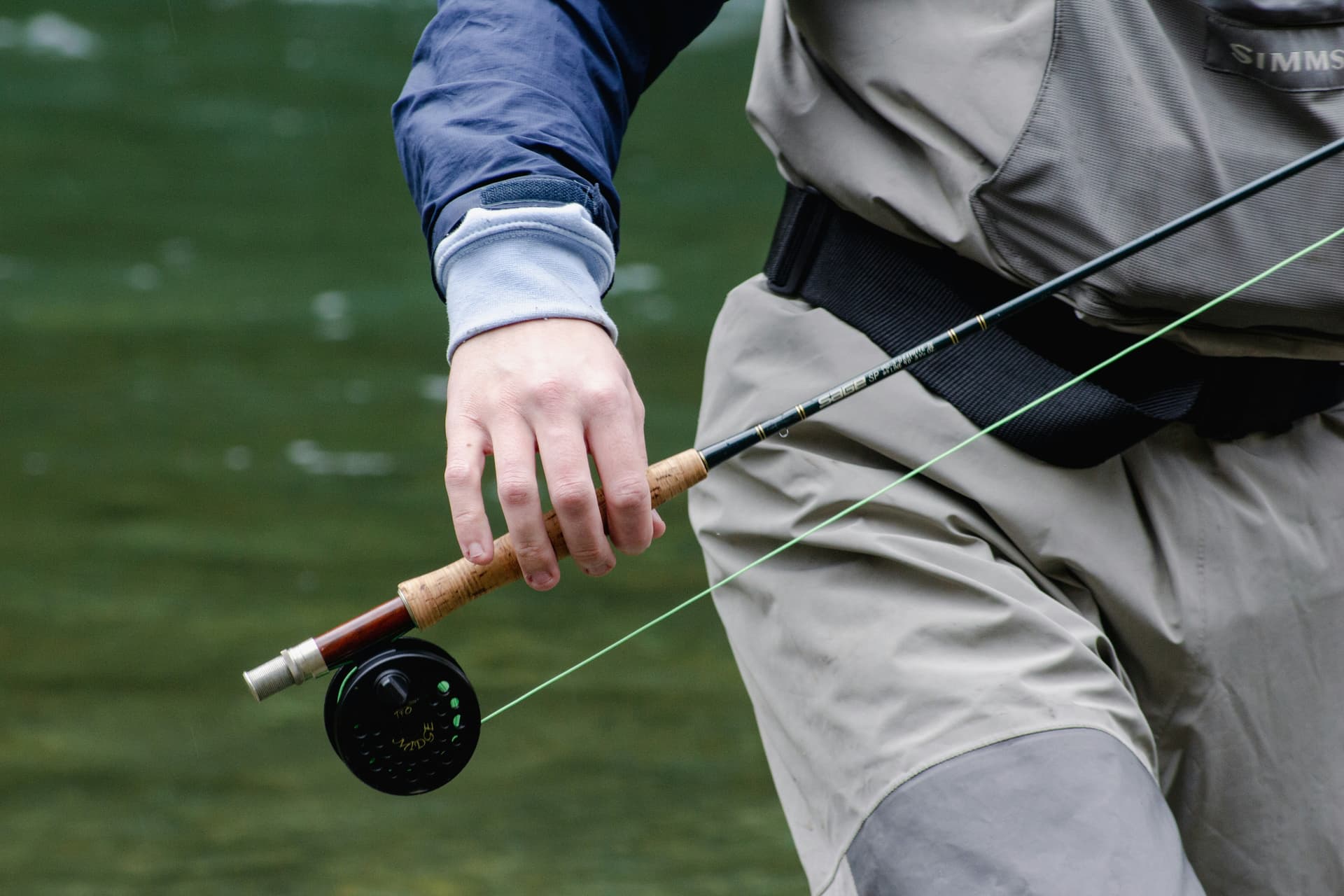
The team worked with community partners from 2023 to 2025 and kept monitoring nests in 2026. Snorkelers surveyed the whole shoreline during spawning season and tagged every nest they found. Then anglers went after the nesting males with rod and reel and artificial lures. The authors explain why: the male provides sole parental care, and they write that when a bass is removed from a nest, no offspring will survive, though they plausibly could if predation is lacking. When a male could not be caught, a snorkeler removed the eggs with a dip net, which the authors describe as not fully effective.
Away from the nests, the team seined shorelines for young bass and set pot traps. Community members angled and reported what they caught. A fishing tournament was held in 2023 and 2024, but catches were low and it was dropped in 2025.
What the numbers looked like
In 2023, snorkelers found 25 nests in Lac Kingsmere, and angling removed 81 adult bass. In 2024 there were six confirmed nests, and the team removed about 8,733 bass, mostly age-0 and age-1 fish. Seining accounted for 69% of the biomass removed that year. Pot traps caught so little that the team dropped them for a while.
By 2025, one nest turned up in Lac Kingsmere. About 831 bass were removed, which the authors describe as a drop of more than 90% in abundance from 2024, along with a 45% drop in biomass. Anglers caught only three bass there all summer. In 2026, the team found no nests and saw only three bass, all about 12 cm, while snorkeling.
Lac Mulvihill, the tiny lake fed by Kingsmere, went from 497 bass removed in 2024 to 21 in 2025. No nests or adult bass were found there.
The catch: this was a rescue job, not an experiment
The authors call this a case study, and they are plain about why. They could not assess the bass population before removal started because they needed to act quickly. The study had no statistical analysis. In their words, it is "difficult to conclusively attribute reductions to removal efforts" without more rigorous study. Changes in fish behavior or in how skilled the removers were could also explain some of the drop.
Other limits are worth knowing. The team missed at least one nest in 2024, which they know because a school of age-0 bass showed up. They write that if four nests had been missed, the hypothetical number of surviving age-1 and older fish would have brought the population back to pre-2023 levels. Community effort was not measured. Native fish were recorded only as bycatch and not counted. And this is two small, closed lakes, one study, not a recipe proven for bigger water.
The authors also stop short of declaring victory. Their position is that eradication is possible if nesting stays at zero, which means more years of monitoring.
What this means for bass anglers
This section is my read, not the study's.
I have never worked on a removal project, so I'm not going to pretend to know what that effort feels like on the water. What stands out to me is that the tools were ordinary ones: a rod, artificial lures, a canoe, and local people who knew the lake. The authors say community participation was essential for early detection and sustained effort.
The authors also note that largemouth bass are a heavily favored recreational target in the surrounding region, and that local authorities should warn the public not to move fish between water bodies. That part is easy to take home. If you fish a lake and catch a species that doesn't seem to belong, tell your state or provincial fisheries agency instead of assuming someone already knows. And never move fish yourself.
One study of two small lakes is not a consensus on how to deal with invasive bass. It is a useful data point on what a few committed people can do.
Citation
Zhang, J., Velazquez, D., LaRochelle, L., Hodgson, R., Haniford, L., Aubrey, B. R., Strick, D., Davis, R., Ilves, K. L., Martel, A. L., & Cooke, S. J. (2026). A case study on attempts to remove invasive Largemouth Bass from two small lakes in Québec. North American Journal of Fisheries Management. https://doi.org/10.1093/najfmt/vqag089