
It's Not the Heat Changing Your Lake. It's Us.
Reggie Thompson · July 13, 2026 · 3 min read
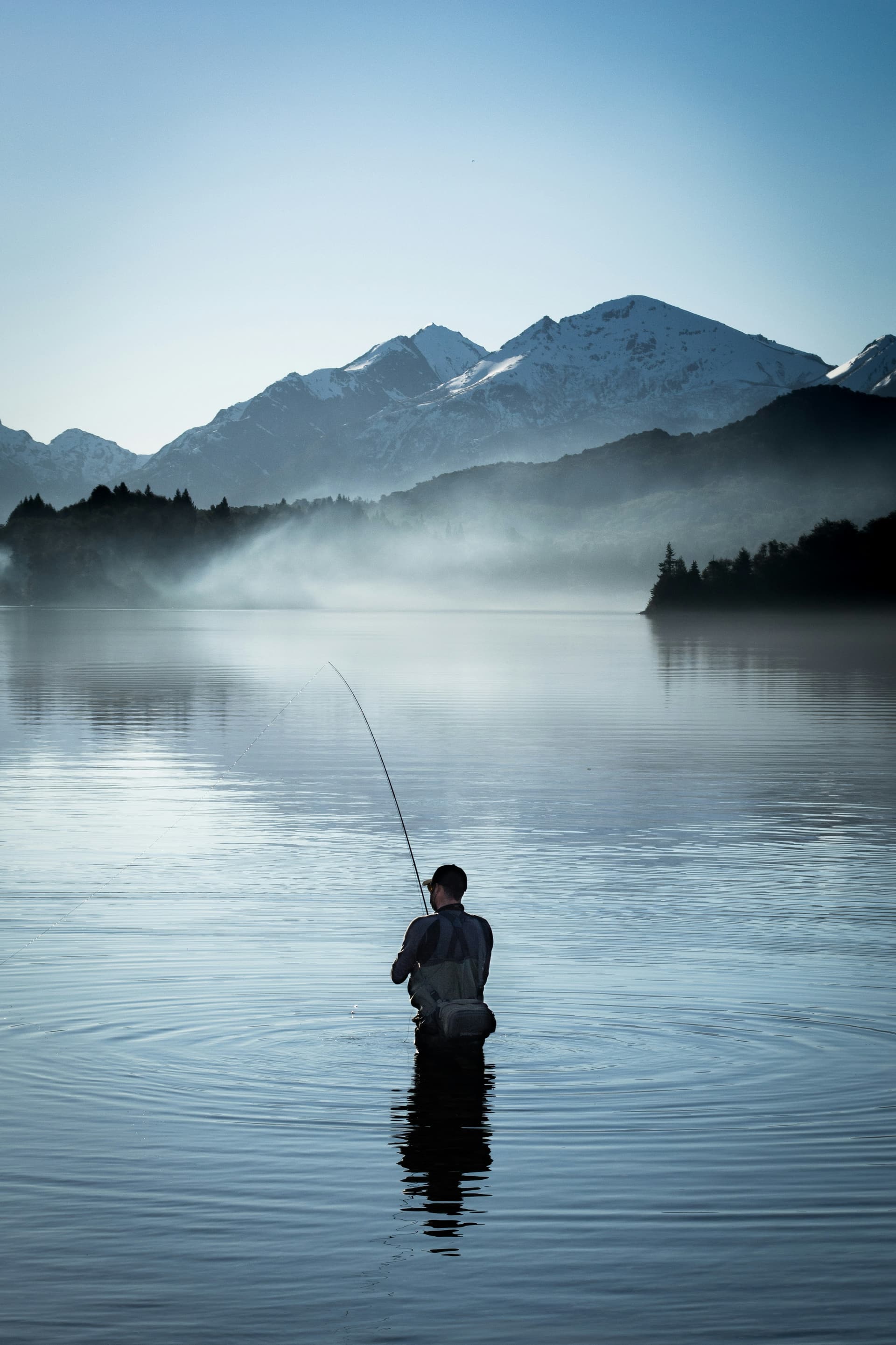
A new study pulled four decades of catch data out of Minnesota and Wisconsin lakes and landed on an answer to an old argument. When it comes to what actually shapes your local walleye or bass population from one year to the next, fishing outweighs warming water almost every time.
That doesn't mean warming is nothing. It means the lever most of us can actually pull, how many fish we take home, still matters more than the thing none of us control.
Four Decades, 521 Fish Populations
A team of fisheries scientists led by Luoliang Xu built a temperature-dependent population model and ran it against 521 freshwater fish populations spread across 197 lakes in Minnesota and Wisconsin. The data ran from 1980 to 2021, 41 years of fishery-independent surveys paired with harvest records, covering a region the study describes as a transitional zone between cold- and warmwater species. That's basically the whole Upper Midwest fish tank in one dataset: cisco standing in for cold water, walleye, northern pike, and yellow perch for the cool-water middle, and smallmouth bass, largemouth bass, bluegill, and black crappie for warmwater.
What They Found
Warming showed up almost everywhere. Nearly all of the populations in the dataset, 98 percent, had a rising temperature trend over the study period. What that warming did to the fish depended heavily on what kind of fish it was.
Most warmwater species benefited. Sixty-five percent of those populations, think bass, bluegill, crappie, saw productivity go up as their lakes warmed. Cool-water species split closer to even, with 53 percent of those populations seeing productivity drop instead. Populations that were already sitting closer to a healthy, full size handled the warming better than populations that were already run down.
But here's the number that matters most for how you think about your own lake. For 92 percent of the populations studied, fishing had a bigger effect on the population's trajectory than warming did, over that same 41-year window. As the authors put it, "effective local fishery management remains a key lever to mitigate these impacts." Warming is a real pressure and it's going to keep building. Right now, though, it's not the dominant one.
The Catch
This is one dataset from two states, not a verdict on freshwater fisheries everywhere. The cold-water side of the analysis is thin. Cisco represented cold water with just 3 populations against 288 cool-water and 230 warmwater populations, so anything the study says about how cold-water fish respond to warming rests on a much smaller sample than the rest of the findings.
The model is also built on 41 years of mostly gradual, linear warming. It wasn't designed to capture the kind of sudden heat-wave die-offs that are becoming more common, and it only looked at temperature, not other climate-driven stressors like changing rainfall or oxygen levels. The authors are upfront that findings shouldn't be stretched past the context they were built in.
What This Means If You Fish These Lakes
Here's my read, and it's mine, not the study's. I've spent a lot of summers eating walleye every meal on trips to Canada with my uncle, and I've never once thought about my own harvest as the thing actually steering that lake's future. This study is a good nudge to think about it that way. If walleye fishing tips or a northern pike trip is on your calendar this year, the boring stuff, actual bag limits, releasing the occasional big one, matters more than whatever the summer's been doing temperature-wise.
I'll be honest, I don't have a great answer for what this changes about how I fish bluegill beds back at the UP cabin. Bluegill did fine or better with warming in this study, and I already release most of what I catch there out of habit more than principle. Maybe that habit is worth keeping on purpose instead of by accident.
Citation
Xu, L., Embke, H. S., Free, C. M., Hansen, G. J. A., Lynch, A. J., Paukert, C. P., Sievert, N. A., & Jensen, O. P. (2025). Disentangling the historical impacts of warming and fishing on exploited freshwater fish populations. Science Advances, 11(40), eadx5138. https://doi.org/10.1126/sciadv.adx5138