
Best Crappie Fishing Lures That Actually Work
Reggie Thompson · June 18, 2026 · 7 min read
Best Crappie Fishing Lures That Actually Work
The best crappie lure is a 1/16 oz jig head paired with a small soft plastic. That's the answer for most situations, most of the time, in most of the country. If you want to skip everything else and just go fishing, that's what to tie on.
Everything below expands on why that works, what the best specific options are, and when other presentations outperform it.
Why Crappie Lures Need to Be Small
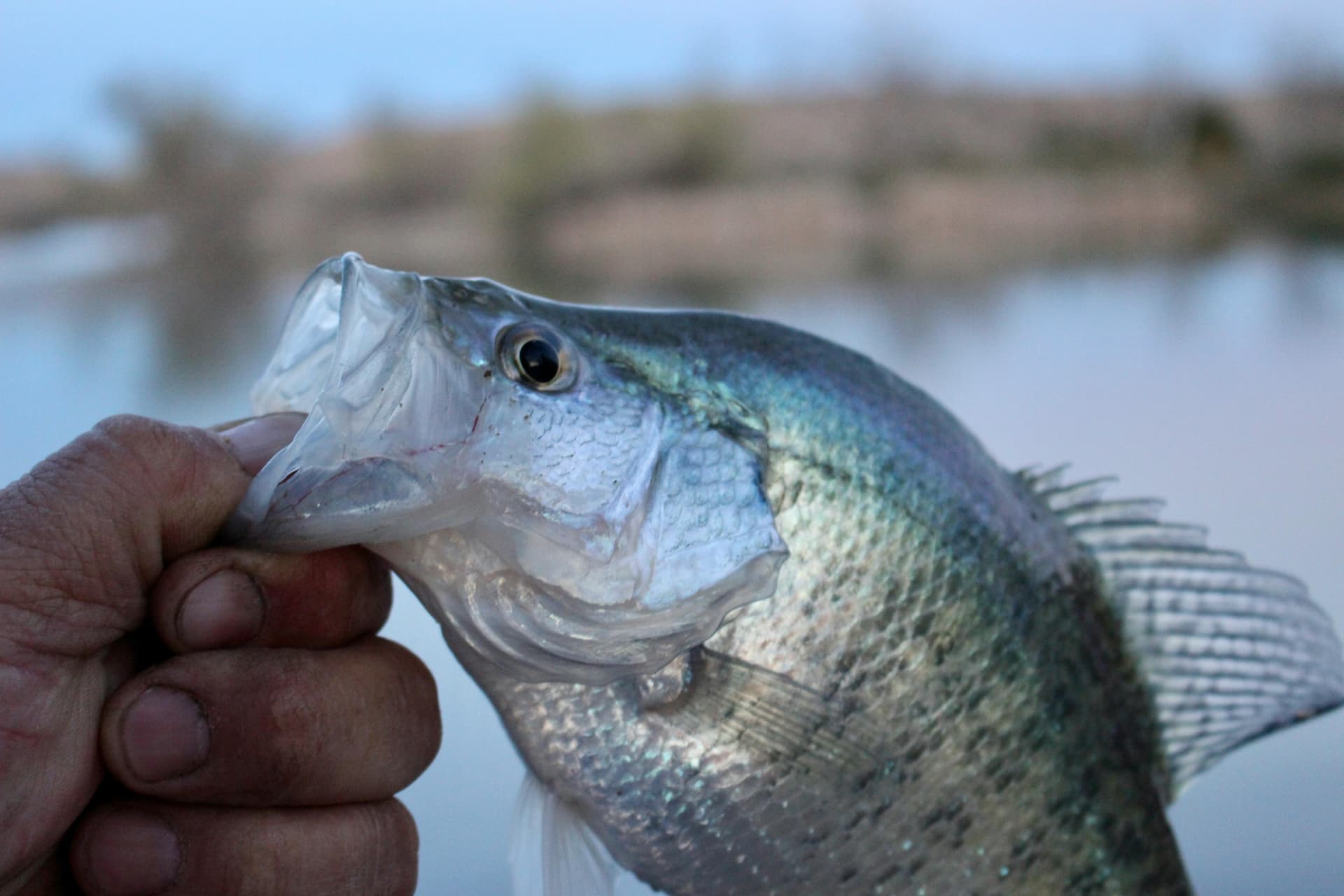
Crappie are not large fish. A quality catch runs 9–12 inches and weighs less than a pound. Their mouths, while proportionally larger than many panfish, are still small. Lures in the 1–2.5 inch range fit their feeding behavior and mouth size far better than the 4–5 inch baits that work on bass.
Crappie are also finicky compared to most panfish. They can be selective about presentation, color, and movement speed. Clear water, which is common in crappie lakes, means they can evaluate a lure before striking. Smaller, more natural presentations get eaten more confidently.
The general rule: when crappie are being difficult, go smaller and slower. That solves more problems than changing colors.
I'll be honest about where my crappie experience comes from: mostly bycatch while bass fishing, and panfish sessions at the UP cabin where I wasn't specifically targeting crappie as a primary species. I know this light-tackle, slow-fall style of fishing well from bluegill work, and the lure logic transfers directly. The Bobby Garland Baby Shad is something I can vouch for personally through panfishing. The rest of what's here is a combination of that experience and what dedicated crappie anglers keep recommending consistently. I'd rather be transparent about that than pretend I've fished every lure on this list for crappie specifically.
The Best Crappie Lures
Jig Heads with Soft Plastics, The Foundation
Best for: All situations, all seasons, all water types
A jig head, a weighted hook, paired with a 1–2.5 inch soft plastic body is the core of crappie fishing. The weight gets the bait down, the soft plastic provides action, and the hook connects to the fish. Simple, versatile, and proven.
Jig head weight:
- 1/64 oz: Still water, ultra-shallow presentations, very finicky fish
- 1/32 oz: The most versatile weight, slow fall, light current, standard dock and brush fishing
- 1/16 oz: Deeper water, mild current, slightly larger fish
- 1/8 oz: Deep brush piles, wind, faster retrieves for aggressive fish
Match the weight to depth. Use the lightest head that gets you to the right depth with the retrieve speed you want.
Best soft plastic for crappie: The Bobby Garland Baby Shad is the most proven crappie soft plastic on the market. The fat body tapers to a spear-shaped tail that quivers on the fall and through the retrieve. It comes in colors matched to every water condition and time of year.
For a paddle-tail option that moves even on the slowest possible retrieve, the Bobby Garland Baby Shad Swim'R is what I'd choose for sluggish cold-water crappie.
Color selection:
- Clear water: white, silver, shad, pearl, light green
- Stained water: chartreuse, pink, orange, bright two-tone patterns
- Overcast or low light: glow patterns, black/chartreuse contrast
- General starting point: white/chartreuse, visible in most conditions
Inline Spinners (Rooster Tail)
Best for: Active fish, moving water, covering water quickly
Inline spinners are the searching bait of crappie fishing. The blade creates flash and vibration that attracts crappie from a distance. When fish are scattered and you're trying to locate them, a spinner retrieves faster than a jig and covers more water per cast.
The original Rooster Tail in 1/16 or 1/8 oz is the standard. White and yellow are the go-to colors. Cast beyond your target area and retrieve through it at steady medium speed. In moving water or along a current seam, the spinner works with the current.
Marabou Jigs
Best for: Vertical jigging, cold water, dock shooting
A marabou jig is a classic panfish pattern, a weighted hook with hand-tied marabou feathers that breathe and pulse in the water with any movement. In cold water when crappie are lethargic, the marabou's movement on a nearly stationary bait triggers strikes that a hard plastic won't.
These are the lures for vertical fishing directly below a dock, around a brush pile, or through the ice. Drop them to the fish's depth, give them minimal action, and let the marabou do the work.
Small Crankbaits
Best for: Active fish, post-spawn, covering open water
Micro-crankbaits in the 1–2 inch range are underused for crappie. They work particularly well in the post-spawn period when fish are aggressive and chasing baitfish in open water. The wobbling action and baitfish profile provoke reaction strikes.
Cast along weed edges and retrieve at moderate speed. The bait dives to 2–5 feet, right in the crappie's preferred feeding depth during most of the year.
How to Fish a Jig for Crappie: The Two Methods
Vertical jigging: Position directly above target structure (brush pile, dock piling, stump) and lower the jig to the fish's depth. Lift the rod tip 3–6 inches, let the jig fall on semi-slack line, repeat. Most strikes happen on the fall. Watch for a "tick" or slight resistance, that's a crappie eating it.
Casting and retrieving: Cast past your target and retrieve through the strike zone. A slow, swimming retrieve works for most situations. Add occasional pauses, let the jig sink for 2–3 seconds, to trigger fish that follow but don't commit.
Under a float: Suspend the jig under a slip float at the fish's depth. This keeps the bait in the zone indefinitely with minimal effort. Good for fishing specific depths over submerged brush.
Gear for Crappie
Rod: 6–7 foot light or ultralight spinning rod. Crappie have soft mouths, "paper mouths", that tear easily under heavy pressure. A lighter, more sensitive rod helps you feel light bites and fight fish without tearing the hook free.
The first few crappie I specifically targeted, I was using a medium bass spinning rod and setting the hook the way I would on a bass. I tore through three fish before I slowed down and figured out what was happening. A smooth upward lift instead of a snap. That's the whole adjustment. The rod choice matters here in a way it doesn't for bass.
Reel: 1000–2500 size spinning reel. Nothing heavy needed.
Line: 4–6 lb monofilament or fluorocarbon. Lighter line casts small jigs farther and has less effect on the natural fall of the lure. Fluorocarbon is nearly invisible in clear water.
Crappie Fishing Lures FAQ
What is the best lure for crappie? A 1/32 oz jig head with a 1.5–2 inch soft plastic body is the most consistently effective crappie lure. The Bobby Garland Baby Shad is among the most proven soft plastic choices. For active fish, inline spinners like the Rooster Tail work well as searching baits.
What color jig is best for crappie? In clear water, white, silver, and natural shad patterns outperform bright colors. In stained water, chartreuse, pink, and orange work better. A white/chartreuse combination is the most versatile starting point across different conditions.
What size jig should I use for crappie? 1/32 oz is the most versatile size for most situations. Go lighter (1/64 oz) for shallow, still water and finicky fish. Go heavier (1/16 to 1/8 oz) for deeper water, current, or larger fish.
What is the best soft plastic for crappie? The Bobby Garland Baby Shad is widely regarded as the top crappie soft plastic. Its fat body and quivering tail produce action on the fall and during slow retrieves. The Baby Shad Swim'R version with a paddle tail is ideal for slower presentations when fish are sluggish.
Do crappie hit topwater lures? Occasionally, particularly in low light when they're feeding near the surface. Small poppers and micro walk-the-dog lures work on active fish at dusk and dawn. It's not the primary technique, but it happens and it's exciting when it does.